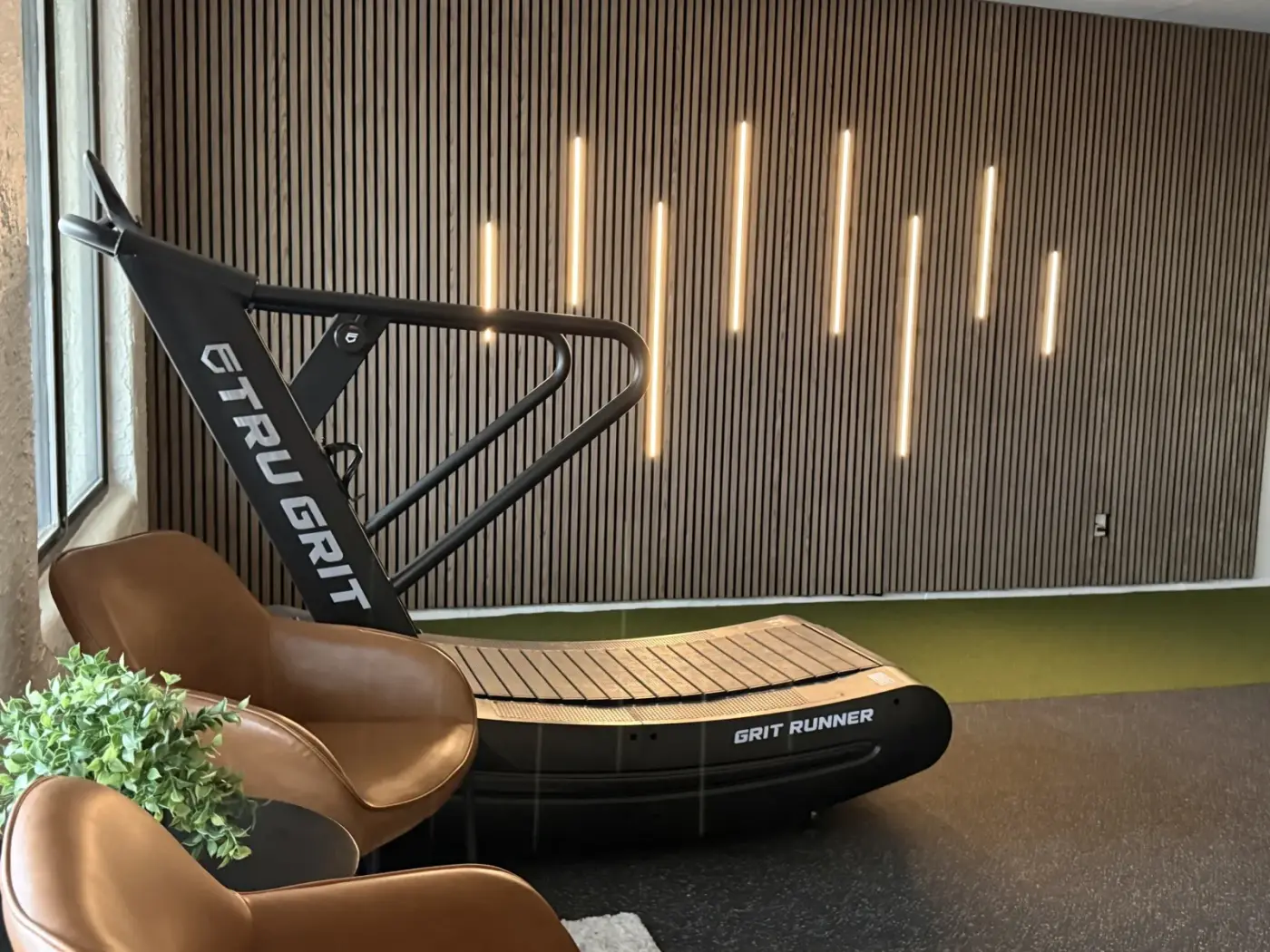
Knee, shin, Achilles or heel pain that comes back every time the mileage climbs? A running gait analysis at Solas PT films how you actually run, from the side and from behind, and reviews it with you. Then one-on-one physical therapy keeps you running while the injury heals, with Dr. Andrew Cisneros, PT, DPT, MS, a full hour every visit, in west El Paso.
"My daughter has been a patient of Dr. Cisneros for two separate injuries, and we've had an amazing experience both times. He is professional, encouraging, knowledgeable, and kind. He creates a fun and positive environment that makes recovery enjoyable and motivating. I highly recommend him — especially athletes working to get back into sports."
"Andrew did a thorough assessment of my injury and explained my issues in a way I could understand. He recommended dry needling, talked me through the treatment, and I felt the work immediately. Within a couple of days I was back to full function with my training. Highly recommend if you are looking for one-on-one time with a physical therapist!"
"Dr. Cisneros is one of a kind. Not only is he excellent in making you feel better but also getting you moving like you're supposed to again. He is so kind and compassionate and just an overall good person. Do yourself a favor and book an appointment — you won't regret it one bit!"
A running gait analysis is a filmed look at how you actually run. Most running injuries are not one bad step; they are the same step repeated about 170 times a minute with a little too much load in one place. The analysis finds where that load is going and turns it into a short list of changes you can feel on your next run.
Who it is for: road runners and running club regulars, trail runners on the Franklin Mountains, triathletes and Hyrox athletes, runners whose injury keeps coming back, runners returning after time off, and anyone starting a race build who wants the pattern checked before the mileage climbs.
It is not a shoe-store foot check. It looks at the whole runner and ties what it finds to your injury.
Camera angles, side and rear, reviewed with you on screen so you see the pattern yourself.
Minutes, one-on-one with the same Doctor of Physical Therapy at every visit.
Referrals needed for the first 30 days. Book directly, evenings and weekends.
You run on the curved treadmill while Dr. Cisneros films from the side and from behind, then you watch the footage together, so you see the pattern rather than take anyone's word for it.
You leave with the one or two form changes that matter most for your injury, the drills that build them, and a loading plan that keeps you running while the tissue adapts.
Done within the $150 one-hour evaluation, or at a $120 follow-up visit once running is the goal. No separate fee.
Every stage, from a new ache in week two of a race build to the first runs back after surgery.
Pain at the front of the knee (patellofemoral pain) or along the outside of the knee and thigh, usually tied to overstriding, a dropping pelvis or a knee drifting inward on landing. Knee pain.
Achilles tendinopathy and calf strains from mileage jumps, hills and how the calf absorbs each landing. Tendons recover with the right load, not with rest alone.
Plantar fasciitis: heel pain on the first steps in the morning or at the start of a run. Calf and foot loading, foot strike and dry needling when it is indicated.
Shin splints from a fast build in distance or speed. Bone stress is screened for, and a suspected stress fracture is referred for imaging before you run on it.
Hip pain, glute and hamstring tendon pain, and strains from speed work and hills. Strength and control for single-leg landing, including gluteal tendinopathy. Hip pain.
Ankle sprains, downhill knee pain and mid-back or low back pain from long efforts on the Franklin Mountains trails. Uneven ground is built back into training on purpose.
From the first run on camera back to your normal training, in the same clinic, with the same physical therapist.
A full hour, one-on-one. The injury is assessed, and you run on the curved treadmill while it is filmed from the side and behind, then reviewed together.
The irritated structure is identified, and so is the reason: a training jump, a form pattern, a strength gap, or a combination.
Manual therapy and dry needling when indicated, in a private treatment room, to calm the pain so the running and strength work can progress.
You leave knowing how far, how fast and how often to run this week, the one or two form changes to practice, and the strength work that makes them stick.
Running comes back when you pass the criteria, not when a number of weeks has gone by: no swelling, strength within range side to side, and single-leg control that holds. Volume is built before speed.
Most runners work during the day and run before or after. Appointments are in the evening, Monday through Thursday 4:00 to 7:30 PM and Friday 4:00 to 6:30 PM, and on weekends, Saturday 9:00 AM to 4:00 PM and Sunday 1:00 to 4:00 PM, so a gait analysis or a treatment visit does not cost you a morning at work.
Runners get hurt where strength and load do not keep up with the miles. The clinic has the curved treadmill for the gait analysis and a training floor for the strength and power work that keeps the form changes in place.
A running gait analysis is a filmed look at how you actually run. At Solas PT in El Paso you run on a curved, self-powered treadmill while Dr. Andrew Cisneros, PT, DPT, MS films from the side and from behind. He looks at cadence and stride length, how the pelvis and knee control each landing, foot strike and calf loading, and trunk and arm swing, and tests the single-leg strength that supports the pattern. You watch the footage together and leave with the two or three changes that matter most.
At Solas Physical Therapy, 300 N Resler Dr, Ste F, in west El Paso. It is done one-on-one as part of your evaluation, or at a follow-up visit once running is the goal, with evening and weekend appointments so it fits around work.
It is part of your visit, not a separate fee: within the $150 one-hour evaluation, or a $120 follow-up visit for a patient already under care. HSA and FSA cards are accepted, and you pay per visit with nothing up front.
Yes. A shoe-store analysis is usually a short look at your feet to suggest a shoe. A physical therapy gait analysis looks at the whole runner, from cadence and stride to hip and knee control and single-leg strength, to find what is overloading the injured tissue, and turns it into form changes, drills and a loading plan. Solas PT does not sell shoes.
There is no single correct form for every runner. What matters is the pattern that loads your body well: landing closer under your body instead of far out in front, a cadence that avoids overstriding, a level pelvis and a knee that tracks over the foot, and relaxed arms that swing forward rather than across. A gait analysis shows which of those is worth changing for you, and which is not.
Mid-back pain while running usually comes from how the trunk and arms move: too much side-to-side sway, arms crossing the body, a stiff upper back, or a forward lean that tires the back muscles over the miles. A gait analysis films the trunk and arm swing along with the legs, and treatment pairs a couple of form changes with hands-on care and strength work. Back pain with fever, unexplained weight loss, or pain at rest at night should be checked by a physician.
Usually not. Most runners keep running with an adjusted plan, such as less distance, a different pace, softer surfaces or more rest days, while the injured tissue is loaded back up. Running is paused only when it truly has to be, for example with a suspected stress fracture.
No. Texas allows physical therapy without a physician referral for the first 30 consecutive calendar days, so you can book directly and start this week. A referral is required to continue past 30 days, and Solas PT helps you arrange one if you need it.
Sports Patient · Local Guide
"Andrew was very professional, attentive, and knowledgeable. He listened to the pain I was having in my shoulder and gave me the right treatment to get me back to my rock climbing activities."
Book an evaluation with a running gait analysis at the Solas PT clinic on Resler Dr: a full hour, one-on-one, with a plan for your next run before you leave.
Also read: Physical Therapy for Lifters → · ACL Rehab and Return to Run →