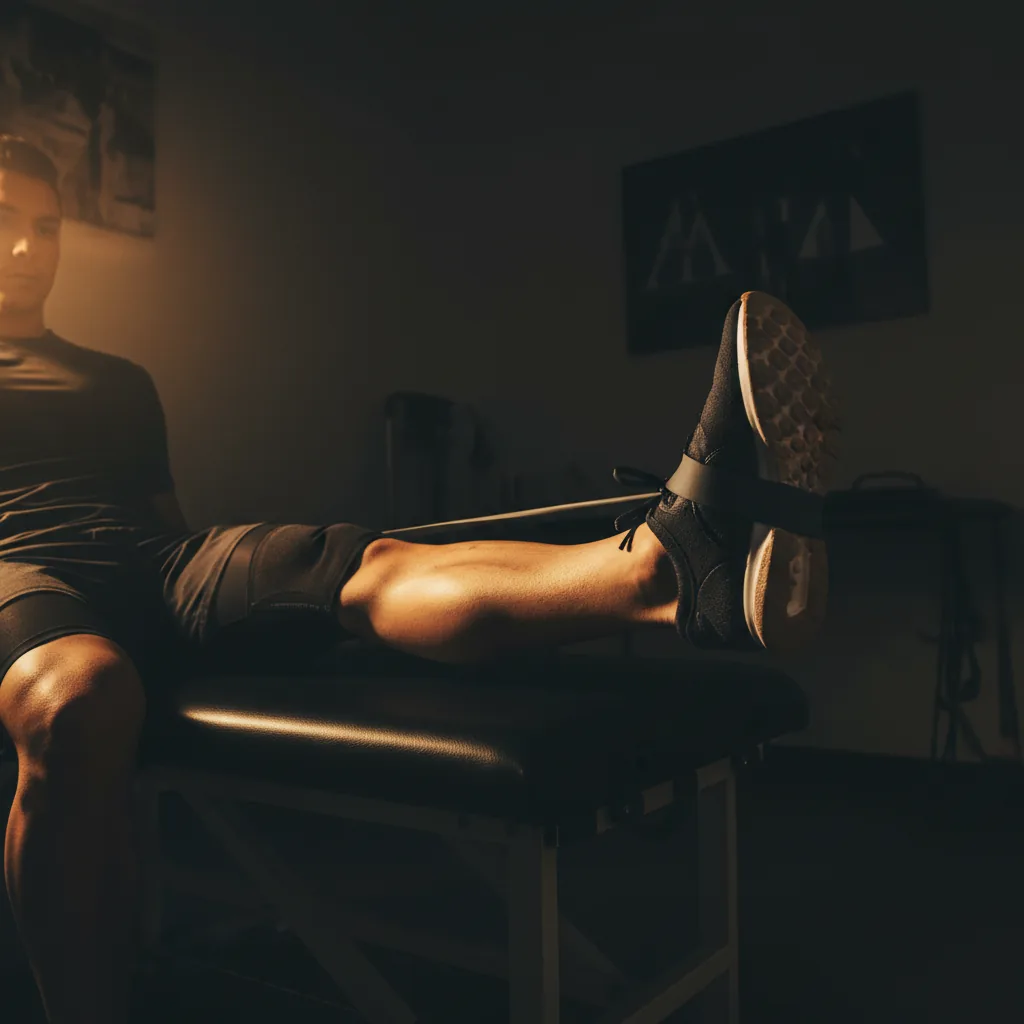
Knee pain is one of the most common presentations I see — and one of the conditions where the quality of the clinical examination most directly determines the outcome of treatment. Give the wrong exercise to the wrong knee diagnosis and you can delay recovery by months. Prescribe open-chain loading to a knee with significant ACL laxity and you create further instability. Load a meniscal injury with high compressive forces and you aggravate it every session.
The evaluation has to come first. And it has to be thorough.
Red flags — seek immediate evaluation: Sudden swelling after a traumatic event, inability to bear weight, a "pop" at the moment of injury, the knee locking and refusing to straighten, or a feeling that the knee is giving out entirely — these warrant same-day evaluation, not a home exercise program.
Why the Examination Changes Everything
One of the most significant gaps between experienced and inexperienced physical therapists is the ability to detect acute ligamentous and meniscal injuries through hands-on clinical testing. Laxity testing for the ACL and MCL — the Lachman, anterior drawer, and valgus stress tests — requires years of practice to interpret accurately. The difference between a positive and a negative finding can be subtle: a millimeter of extra tibial translation, a slightly softer end-feel. To someone without repetitions, it feels normal. To someone who has performed hundreds of these exams, the abnormality is immediately obvious.
This distinction determines the entire direction of treatment — which is why a rushed assessment in a high-volume clinic so often produces the wrong plan of care.
The Exercise Choice That Can Help or Harm
Once a specific injury is identified, the next clinical decision is whether to use open-chain or closed-chain lower extremity exercises — and getting this wrong has real consequences.
With significant ACL laxity or injury: open-chain leg extension exercises are contraindicated. The seated leg extension machine creates an anterior shear force between the tibia and femur — exactly the direction the ACL is supposed to resist. Performing it with ACL compromise creates further laxity and instability at the joint. Closed-chain exercises — squats, leg press, step-ups, lunges — recruit the hamstrings and surrounding musculature in a way that co-contracts and stabilizes the joint rather than shearing it. This is the appropriate starting point.
With meniscal injuries: the priority is avoiding high compressive forces at the knee. Deep squats, heavy loaded knee flexion, and rapid pivoting motions place significant compressive stress on the meniscus and can worsen a tear or aggravate meniscal irritation. Exercises in a more extended knee position — partial range squats, straight leg raises, terminal knee extensions — allow loading without the compressive provocation.
Identifying which of these applies to a given patient is only possible through proper hands-on assessment. It cannot be done from a questionnaire or a symptom checklist.
Patellofemoral Pain Syndrome: The Most Common Knee Presentation
PFPS is the most frequent type of knee pain I treat, characterized by anterior knee pain — around or behind the kneecap — that worsens with squatting, stairs, prolonged sitting, and running. Patients often describe it as coming from "inside" the knee or "under" the kneecap.
The name suggests it's a kneecap problem. The reality is that it's almost always a hip problem, an ankle problem, or both — and treating only the knee without examining the entire kinetic chain produces incomplete and temporary results.
Hip Abductor & External Rotator Weakness
The gluteus medius controls the position of the femur during every step, squat, and stair climb. When it's weak, the femur rotates inward (internal femoral rotation), which shifts the kneecap laterally out of its groove and creates the friction pattern that causes PFPS. This is the most common underlying driver I find — and the one most often missed when the examination stops at the knee.
Assessment: I evaluate hip abductor and external rotator strength bilaterally, watch single-leg squat mechanics for femoral drop and valgus collapse, and assess gluteus medius activation timing during gait. The numbers are often strikingly different between the painful and non-painful side.
Restricted Hip Flexion & Ankle Dorsiflexion
Hip flexion restriction forces compensatory anterior pelvic tilt and changes the mechanics of every squat and step. Restricted ankle dorsiflexion — the ability to move the shin forward over the foot — causes the heel to lift early or the foot to turn out during squatting, both of which drive the knee into valgus and increase patellofemoral stress.
Assessment: I measure passive hip internal and external rotation, Thomas test for hip flexor length, and weight-bearing ankle dorsiflexion. A 2–3 cm deficit in dorsiflexion side-to-side is clinically meaningful and frequently correlates with the symptomatic limb. These mobility deficits require joint mobilization — not just stretching — to restore normal arthrokinematics.
Training Load & Activity Spikes
PFPS frequently presents following a rapid increase in training volume — a new running program, an uptick in CrossFit sessions, an abrupt return to sport after a break. The patellofemoral joint absorbs compressive force proportional to knee flexion angle and load. When volume increases faster than the tissue can adapt, irritation accumulates.
Assessment: I take a detailed training history — weekly volume, recent changes, surface and footwear. Load management is part of the plan of care, not just exercise prescription. Reducing the provocative load temporarily while building the hip strength and mobility that will support higher volumes long-term is the correct approach.
Knee Pain That Won't Go Away?
If you've been told it's just "weak quads" — there may be more to it. A full knee exam at Solas PT identifies laxity, meniscal involvement, hip and ankle drivers, and puts together a plan that actually addresses the cause. No referral needed in Texas.
Manual Therapy: Restoring Joint Mechanics
When joint restrictions are present — loss of tibiofemoral glide, patellar mobility deficits, or restricted proximal or distal joint mechanics — manual therapy is an excellent choice to restore normal arthrokinematics before exercise can be fully effective.
A joint that isn't moving correctly through its available range will compensate. Those compensations load nearby structures in ways they weren't designed to handle, creating the secondary pain patterns that make knee conditions so persistent. Manual therapy — tibiofemoral joint mobilization, patellar mobilization, and proximal and distal work at the hip and ankle — addresses these restrictions directly, restoring the movement quality that exercise alone cannot recover.
I use manual therapy as part of an integrated plan — not as a standalone treatment. Restoring mobility without subsequently loading the joint in the corrected position doesn't produce durable change. Mobilization followed by immediately practicing the target movement in a controlled, loaded context is how lasting arthrokinematic improvement is achieved.
Single-Leg Stability: The Foundation of Injury Prevention
Once the acute presentation is managed and the underlying drivers are addressed, single-leg stability and strength work becomes the cornerstone of both rehabilitation and injury prevention — especially for athletes returning to sport.
Almost every athletic activity — running, cutting, jumping, landing — is functionally a single-leg event. Training bilaterally and calling the rehab complete produces athletes who are strong in the gym and under-prepared for the demands of sport. Single-leg squats, single-leg Romanian deadlifts, lateral step-downs, and reactive single-leg activities under neuromuscular fatigue replicate the actual demands the knee will face and expose the deficits that bilateral training masks.
For athletes returning from ACL injuries, this phase is particularly critical. Return-to-sport criteria that rely only on time since surgery — rather than limb symmetry indices, hop tests, and functional movement quality — consistently produce re-injury rates that are far higher than necessary. I use objective measurements to determine readiness, not calendar dates.
The Female Athlete: ACL Risk & the Triad
We are seeing a significant and troubling rise in ACL injuries among female high school athletes — a trend that deserves direct attention in any discussion of knee pain and injury prevention.
Female athletes have anatomical, hormonal, and neuromuscular factors that increase ACL vulnerability: a wider Q-angle (the angle from hip to knee), greater tendency toward dynamic valgus during landing, and hormonal fluctuations across the menstrual cycle that affect ligamentous laxity. These are not reasons to limit athletic participation — they are reasons to invest in prevention programming early.
The Female Athlete Triad — the relationship between low energy availability, menstrual dysfunction, and low bone mineral density — must also be considered when evaluating young female athletes with musculoskeletal pain. Relative energy deficiency affects bone health, muscle recovery, and hormonal support for tissue integrity. It is often missed because it doesn't present with obvious symptoms, and because screening for it requires going beyond the musculoskeletal complaint into a broader conversation about training load, nutrition, and health. I include this screening as part of my evaluation for female athletes presenting with knee pain or recurring lower extremity injuries.
Neuromuscular training programs targeting landing mechanics, hip strength, and dynamic valgus control have strong evidence for reducing ACL injury rates in female athletes. This is part of how Solas PT approaches injury prevention — not just rehabilitation after the fact.
One-on-one knee care in West El Paso
Whether you're dealing with a fresh injury, a recurring problem, or working to prevent one — a thorough knee examination with Dr. Cisneros will identify exactly what's driving it and what the right plan looks like. No referral needed. Same-week appointments. HSA/FSA accepted.
Frequently Asked Questions
Because different structures fail in different ways under load. A knee with ACL laxity is unstable in anterior shear — open-chain leg extensions create exactly that shear and worsen instability, while closed-chain exercises co-contract surrounding muscle to stabilize the joint. A meniscal injury is aggravated by high compressive forces at end-range flexion — deep squats and loaded knee bending provoke it, while more extended-position loading avoids it. Generic "knee strengthening" without identifying the specific injury can actively cause harm.
PFPS is anterior knee pain — around or behind the kneecap — that worsens with stairs, squatting, prolonged sitting, and running. Despite being named as a knee condition, it is most commonly driven by hip abductor weakness (allowing the femur to rotate inward and shift the kneecap out of its groove), restricted hip and ankle mobility, and overuse or training load spikes. Treating only the knee while ignoring the hip and ankle produces temporary improvement at best. A thorough kinetic chain examination is required to identify which drivers are active in each patient.
Not necessarily. The research on degenerative meniscus tears — particularly in patients over 40 — consistently shows that physical therapy produces outcomes equivalent to or better than arthroscopic surgery, without the surgical risk or recovery time. The indications for surgery are more specific: a locked knee that cannot be extended, a large tear causing mechanical symptoms, or a tear in a younger patient with acute traumatic injury and mechanical instability. A thorough PT evaluation and, when indicated, imaging will clarify your specific situation. Many patients who were told they "need" surgery discover that 8–12 weeks of proper rehabilitation resolves their symptoms without it.
Several factors converge: a wider Q-angle (the line from hip to knee) creates a structural tendency toward dynamic valgus under load; hormonal fluctuations across the menstrual cycle affect ligamentous laxity; and neuromuscular patterns in landing and cutting mechanics tend to differ from male athletes in ways that increase knee valgus stress. These aren't barriers to sport — they're targets for prevention programming. Neuromuscular training focused on landing mechanics, hip strength, and dynamic valgus control has strong evidence for meaningfully reducing ACL injury rates in female athletes when implemented early and consistently.
The Female Athlete Triad describes the interrelated relationship between low energy availability (often from underfueling relative to training demands), menstrual dysfunction, and low bone mineral density. Together, these impair tissue recovery, reduce hormonal support for ligament and bone integrity, and increase overall injury risk — including stress fractures and soft tissue injuries. It is frequently undetected because athletes and coaches don't recognize it, and because a musculoskeletal complaint is rarely connected to nutrition and menstrual history in a typical clinic visit. I screen for it as part of evaluations for female athletes with recurring knee pain or lower extremity injuries.
No. Texas allows direct access to physical therapy without a physician referral. Dr. Cisneros can evaluate, diagnose, and begin treating your knee — including ligamentous testing, manual therapy, and a progressive rehabilitation plan — without any prior medical visit. Same-week appointments are available. Call or text (915) 318-7381 or book online.
Knee Pain Treated With
The Examination It Deserves.
A thorough one-on-one evaluation — ligamentous testing, meniscal assessment, kinetic chain analysis, and a plan built for your specific knee — not a generic exercise sheet. No referral needed. Same-week appointments in West El Paso.
Book a Knee EvaluationAlso read: Knee Pain Treatment in El Paso → | Lower Back Pain Treatment → | Sciatica Treatment: What Most Therapists Get Wrong → | Knee Replacement Rehab in El Paso →