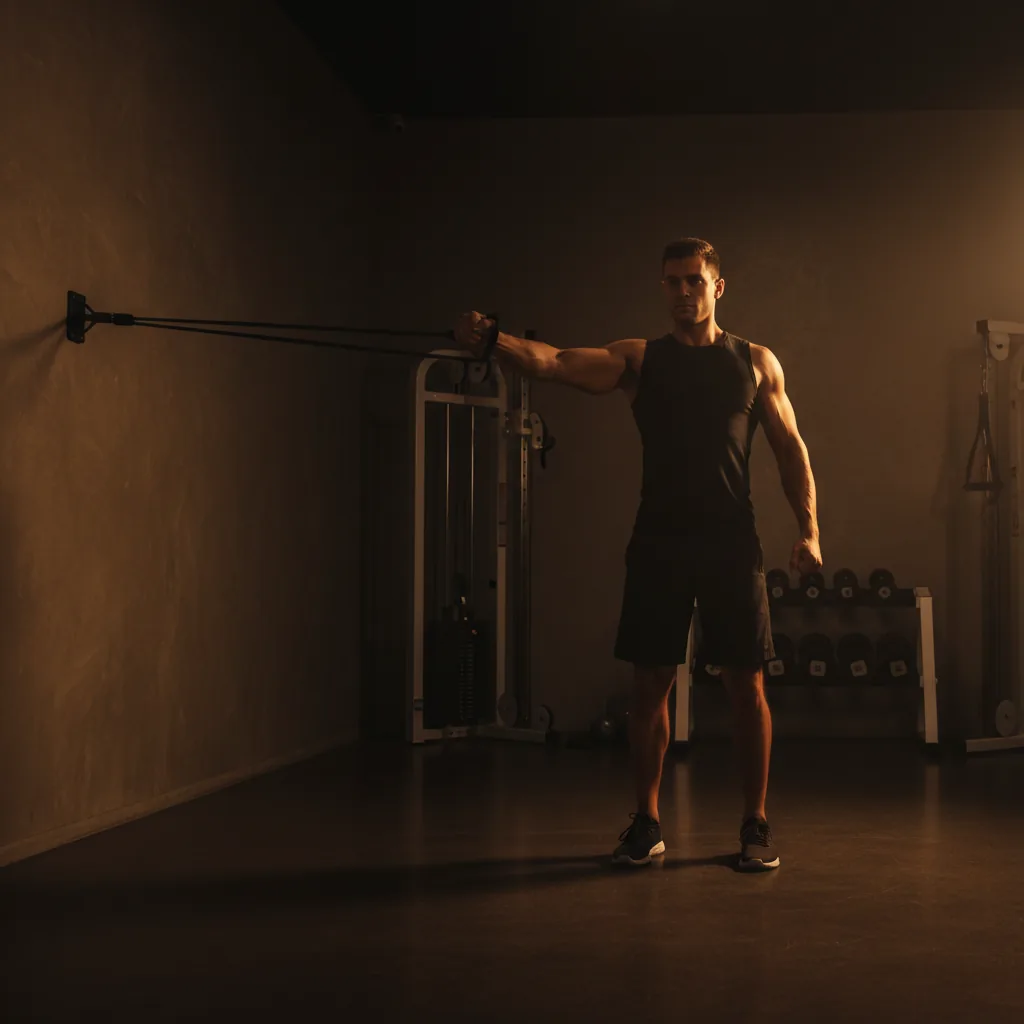
A rotator cuff injury requires careful evaluation before any treatment is applied. The approach that works for a mild atraumatic tendinopathy is not the approach that works for an acute full-thickness tear with instability — and treating them the same way is exactly how patients end up in a surgery consult that a properly executed conservative program could have prevented.
Red flags — seek orthopedic evaluation promptly: Inability to lift the arm above shoulder height with significant weakness, a "drop arm" sign (arm falls when passively elevated), or signs of anterior or posterior shoulder instability on examination may warrant an orthopedic consultation — which I will facilitate if indicated after my assessment.
The Subjective Interview: Traumatic vs. Atraumatic Onset
The first and most important part of any rotator cuff evaluation is a thorough subjective interview. This conversation must be attended to carefully — because the onset mechanism changes everything about what's likely happening structurally and what treatment approach is appropriate.
A traumatic onset — a fall on an outstretched arm, a sudden traction injury, a direct blow to the shoulder — raises the clinical suspicion for acute structural damage: a full or partial tear with significant retraction, a labral injury, or anterior or posterior instability from capsule disruption. These presentations require a more cautious initial approach and clear special testing to determine whether the conservative path is viable or whether orthopedic referral is the appropriate next step.
An atraumatic onset — gradual pain with overhead activity, progressive shoulder weakness, pain that started without a clear injury event — suggests a degenerative or overuse pattern: tendinopathy, bursitis, or a degenerative partial or full-thickness tear. These patients are almost always excellent candidates for conservative management and respond well to a properly structured program of manual therapy and progressive loading.
Many clinics skip this conversation and go directly to a generic protocol. That's the first place where poor outcomes are created.
Special Testing: Stability, Integrity & Differential Diagnosis
Once the history is clear, the physical examination must include targeted special tests that go beyond basic range of motion measurements.
Anterior & Posterior Stability Assessment
Anterior shoulder instability — the humeral head translating forward relative to the glenoid — can present as pain, apprehension, and functional limitation that mimics a rotator cuff tear. The anterior apprehension test, relocation test, and anterior load and shift test assess this directly. Posterior instability, though less common, presents with posterior shoulder pain and is assessed with the posterior stress test and jerk test.
Finding significant instability on these tests changes the treatment plan substantially. True shoulder instability with capsule compromise may warrant orthopedic evaluation — because strengthening exercises alone will not stabilize a joint with structural laxity. This is a finding that is frequently missed in hurried assessments.
The Cervical Spine Screen: What Most Clinics Skip
I have seen countless cases where peripheral nerve irritations originating from the cervical spine were producing pain, weakness, and limited range of motion patterns that were treated as rotator cuff pathology — for months — without improvement. A proper shoulder evaluation must include a cervical spine screen every time.
C5 and C6 nerve root irritations in particular produce pain in the lateral shoulder and upper arm, weakness in shoulder abduction and external rotation, and limited cervical motion — a presentation nearly identical to a rotator cuff tear on surface examination. Without testing cervical mobility, Spurling's test, upper limb tension testing, and dermatomal sensation, these cases are diagnosed incorrectly and treated incorrectly. The speed of progress is directly linked to getting this differential right early.
This is not a minor or optional part of the evaluation. It is foundational — and it is something that a 15-minute insurance-based intake with an aide simply cannot accommodate.
Manual Therapy: Joint Mobilization Done Correctly
When joint mobility restrictions are present — and they almost always are in rotator cuff presentations — manual therapy is an excellent choice to restore glenohumeral arthrokinematics before exercise can be fully effective.
The direction of mobilization must be determined by clinical assessment, not applied generically. The glenohumeral joint requires anterior-to-posterior, posterior-to-anterior, or inferior glides depending on what the examination reveals about the direction of restricted mobility and the capsular pattern.
Applying the wrong glide direction does not help and can provoke symptoms. This is a skill that requires significant training and clinical repetition to perform correctly — and it is something that most therapy clinics simply do not do, defaulting instead to very generic stretching that targets soft tissue but does not specifically mobilize the joint capsule.
The acromioclavicular joint and scapulothoracic articulation cannot be ignored in this assessment either. AC joint dysfunction contributes to pain with end-range elevation and horizontal adduction and requires its own specific mobilization approach. Restricted scapulothoracic mobility changes the movement pattern of the entire shoulder girdle and must be addressed independently from glenohumeral mobility.
A tailored manual therapy approach — one that is determined by what the exam reveals and updated based on session-to-session response — produces meaningfully faster mobility restoration than generic stretching programs. This is one of the clearest separators between skilled PT and the volume-based, aide-supervised model that dominates insurance-based practice.
Shoulder Pain That Hasn't Resolved?
If you've been given generic exercises without a thorough exam, the cause may not have been identified yet. A full one-on-one evaluation at Solas PT — including instability testing, cervical screen, and targeted manual therapy — changes that. No referral needed in Texas.
Scapular Stabilization: The Missing Piece in Most Programs
The scapula is the platform the rotator cuff operates from. Without a stable, correctly positioned shoulder blade, the rotator cuff cannot function at its intended mechanical advantage — and the subacromial space narrows during arm elevation, creating the impingement pattern that drives most rotator cuff tendinopathy.
Patients with rotator cuff injuries almost universally present with weakness in the scapular stabilizers — the lower and middle trapezius, serratus anterior, and rhomboids. This weakness produces scapular dyskinesis: abnormal scapular movement during arm elevation that reduces the space the rotator cuff tendons pass through.
Targeted scapular exercises are not optional — they are a core component of rotator cuff rehabilitation. The exercises I prescribe most consistently are:
Prone T, Y, and I (Horizontal Abduction)
Lie face-down on a table or elevated surface with arms hanging. For the T: raise both arms directly out to the sides with thumbs up — targets the middle trapezius. For the Y: raise both arms at 45° forward angle, thumbs up — targets the lower trapezius.
For the I: raise both arms directly overhead — targets serratus anterior and the full trapezius length. Hold each position 3 seconds. 2–3 sets of 10 each.
These three movements directly address the scapular weakness that underlies most rotator cuff impingement patterns. Start without weight — for many patients, lifting the arm against gravity in the prone position is already sufficient load to produce meaningful fatigue in the lower trapezius.
Band Low Row with Scapular Retraction
Anchor a resistance band at chest height. Pull elbows back and down, squeezing the shoulder blades together and toward the back pockets — not just pulling the arms back. The key cue is depression of the scapula as you retract: the shoulder blades should move down and in, not just horizontally. Hold the retracted position 3 seconds. 3 sets of 15. This directly trains the mid and lower trapezius in a functional pattern that carries over to overhead mechanics.
The Home Program: Updated Weekly, Not Handed Out Once
A tailored home exercise program is provided to every patient I treat from the first session onward. But the critical distinction — and the one that separates effective from ineffective rotator cuff care — is that the program is updated at every visit.
The exercise that is appropriate at week two is rarely the appropriate exercise at week six. As shoulder mobility improves, as scapular strength builds, as the rotator cuff regains its capacity for loaded movement, the program must advance to reflect those changes. Staying on the same exercises week after week is not progressive rehabilitation — it's busywork that produces a plateau.
In a cookie-cutter insurance-based clinic, a patient may see a physical therapist once across their entire episode of care — the rest of their sessions are supervised by aides executing a static protocol. The home program they were given on day one is the same program they're following in week eight. This is not how tissue heals optimally, and it is not what produces the fastest, most complete outcomes.
At Solas PT, I am present for every session. I am assessing range, strength, quality of movement, and symptom response at each visit. The home program changes accordingly — because what I observe in the clinic determines what should happen at home.
Conservative PT vs. Surgery: What the Evidence Actually Shows
Most rotator cuff tears and sprains do just as well with a properly executed conservative program compared to surgery — and in many cases better, when accounting for surgical risk, recovery time, and long-term outcomes. This is not a minority opinion; it is well-supported in the literature for partial tears and small to medium full-thickness tears, particularly in patients who are not young high-demand overhead athletes.
The key phrase is properly executed. Conservative management that consists of generic strengthening exercises, infrequent supervision, and no manual therapy is not a fair comparison to surgery. The studies showing equivalence or superiority of conservative management involve structured, supervised, progressive programs with regular clinical assessment. That is what Solas PT provides.
When surgery genuinely is indicated — for large tears with retraction, for instability that cannot be stabilized conservatively, for young athletes with functional demands that require full structural integrity — I will say so clearly and facilitate the appropriate referral. The goal is never to avoid surgery ideologically. The goal is to accurately identify who actually needs it.
One-on-one shoulder care in West El Paso
Every session with Dr. Cisneros includes hands-on manual therapy, a cervical screen, targeted scapular and rotator cuff exercise, and an updated home program. No aides, no cookie-cutter protocol, no referral required. Same-week appointments available — HSA/FSA accepted.
Frequently Asked Questions
No. Many rotator cuff tears — including partial tears and small full-thickness tears — respond as well or better to physical therapy than to surgery, according to multiple randomized controlled trials. The decision depends on tear size, which tendon is involved, the patient's age and functional demands, and whether there is significant shoulder instability.
A thorough PT evaluation, including special testing and when needed an orthopedic referral, determines the appropriate path. Patients are frequently referred for surgery they don't need because the conservative program they were given was generic and inadequately supervised.
A skilled evaluation includes a detailed subjective interview to determine if onset was traumatic or atraumatic, special testing for anterior and posterior shoulder instability, rotator cuff strength and integrity testing, AC and scapulothoracic joint assessment, and a cervical spine screen to rule out referred nerve symptoms. The plan of care is built around these specific findings — not handed out as a generic protocol from a template.
C5 and C6 nerve root irritations produce pain in the lateral shoulder and upper arm, weakness in shoulder abduction and external rotation, and restricted cervical motion — a presentation nearly identical to a rotator cuff tear on surface examination. Without testing cervical mobility, Spurling's test, and upper limb tension testing, these cases are diagnosed as shoulder pathology and treated incorrectly for months. I screen the cervical spine in every shoulder evaluation because I have seen this happen repeatedly, and correcting the diagnosis is the fastest path to meaningful improvement.
The scapula is the platform the rotator cuff operates from. When the lower and middle trapezius, serratus anterior, and rhomboids are weak, the shoulder blade moves abnormally during arm elevation — reducing the space the rotator cuff tendons pass through and producing impingement. Targeted scapular exercises such as prone T, Y, and I movements directly address this weakness. It is one of the most important and most frequently omitted components of rotator cuff rehabilitation in generic clinic programs.
A properly tailored home program is specific to the individual's diagnosis, current strength and mobility deficits, and the phase of rehabilitation. At Solas PT, it is provided at every session and updated every week as the patient progresses — because what is appropriate at week two is not appropriate at week six. This ongoing adjustment is something a cookie-cutter insurance-based clinic cannot structurally provide, where a patient may see an actual physical therapist only once and the rest of their care is supervised by aides following a static protocol.
No. Texas allows direct access to physical therapy without a physician referral. Dr. Cisneros can evaluate, diagnose, and begin treating your rotator cuff injury — including manual therapy, instability testing, cervical screen, and a progressive rehabilitation plan — without any prior medical visit. Same-week appointments available. Call or text (915) 318-7381.
A skilled evaluation includes a detailed subjective interview to determine if the onset was traumatic or atraumatic, special testing for anterior and posterior shoulder instability, rotator cuff strength and integrity testing, an acromioclavicular and scapulothoracic joint assessment, and a cervical spine screen — because peripheral nerve irritations from the neck frequently mimic rotator cuff tears and must be ruled out. The plan of care is built around these findings, not a generic protocol.
A properly tailored home program is specific to the individual's diagnosis, current strength and mobility deficits, and the phase of rehabilitation. It is not a printed handout of generic shoulder exercises. At Solas PT, the home program is provided at every session and updated weekly as the patient progresses — because the appropriate exercise at week two is rarely the appropriate exercise at week six. This weekly updating is something cookie-cutter insurance-based clinics structurally cannot provide.
Shoulder Care That Starts With
the Right Diagnosis.
A thorough one-on-one evaluation — subjective interview, instability testing, cervical screen, manual therapy, and a home program that actually evolves week to week. No referral needed. Same-week appointments in West El Paso.
Book a Shoulder EvaluationAlso read: Shoulder Pain Treatment in El Paso → | Dry Needling: Benefits & How It Works → | Lower Back Pain Treatment →