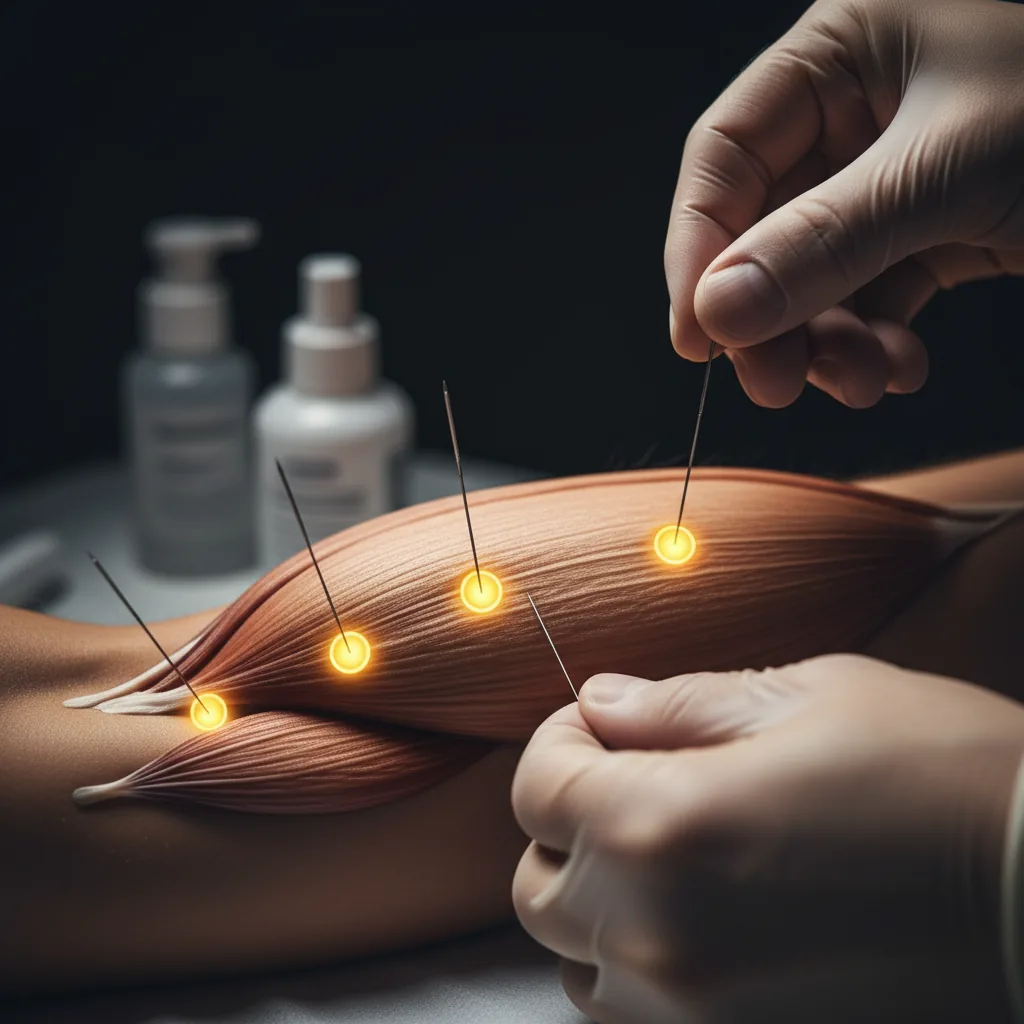
Dry needling has become one of my most effective tools at Solas Physical Therapy in west El Paso for helping patients overcome stubborn muscle tension and chronic pain. Over the years, I've seen remarkable results—athletes returning to sport faster, office workers finding relief from neck and shoulder pain, and patients recovering from injury with fewer limitations. In this article, I want to share what dry needling is, how it works, and five specific benefits that make it such a valuable part of our cash-based physical therapy practice.
Let me start by clarifying what dry needling actually is, since there's often confusion with acupuncture. Dry needling is a technique where I use a thin, solid filiform needle to target trigger points in muscles and connective tissue. Unlike acupuncture, which is based on traditional Chinese medicine principles, dry needling is grounded in Western anatomical and neurophysiological science. The needle creates a controlled micro-trauma that stimulates the body's natural healing response.
When the needle reaches the target tissue, patients often feel what we call a "local twitch response"—a brief involuntary muscle contraction. This is exactly what we're looking for, as it indicates we've successfully activated the treatment area.
The most immediate benefit patients notice is pain reduction. When I perform dry needling on a trigger point, the local twitch response releases tension in that muscle fiber and promotes blood flow to the area. Many patients report feeling relief within 24 hours, though some experience improvement right away. This works particularly well for localized muscle pain, tension headaches, and referred pain patterns. At Solas, I've had runners come in with debilitating IT band pain that responds beautifully to dry needling combined with our other manual therapy techniques.
Tight, restricted muscles limit your movement. By releasing these trigger points with dry needling, you regain mobility much faster than passive stretching alone. I often see patients who've struggled with limited shoulder range of motion for months suddenly regain their ability to reach overhead or rotate their arm. This benefit extends beyond comfort—it allows us to progress your rehabilitation exercises sooner, which accelerates your overall recovery.
Dr. Andrew Cisneros, PT, DPT, MS is El Paso's specialist for trigger point dry needling. No referral needed. Most patients feel a difference after their first session.
When you injure a muscle or ligament, your body immediately develops guarding patterns—nearby muscles tighten to protect the injured area. While this is protective in the short term, prolonged muscle tension can delay healing. Dry needling helps resolve these secondary tension patterns, allowing inflammation to resolve more efficiently and supporting your body's natural repair mechanisms. This is why I often use dry needling early in rehabilitation: it gives your injured tissue the best environment to heal.
Beyond just feeling looser, dry needling actually resets the neuromuscular system. Trigger points create dysfunctional motor control patterns—your brain essentially "learns" to use that muscle incorrectly. By releasing these points with dry needling, I'm helping restore normal muscle firing patterns. This is crucial for athletes at Solas and anyone dealing with movement dysfunction. Once tension is released and normal firing patterns return, strengthening exercises become far more effective.
At our cash-based physical therapy clinic in El Paso, dry needling doesn't stand alone. It's one tool in a comprehensive approach that includes manual therapy, specific exercise prescription, movement education, and functional training. Dry needling handles the local muscle dysfunction efficiently, which then allows your nervous system to learn new, healthier movement patterns through the exercises and corrective work we do. This integration is why patients see such dramatic results.
A typical dry needling session at Solas lasts 15-20 minutes. I begin by assessing your movement patterns and identifying trigger points through manual palpation. Once I locate the affected muscle, I insert the needle—most patients describe it as a quick pinch followed by no sensation at all. We then wait for the local twitch response, which might occur multiple times. After the needles are removed, you may feel some post-treatment soreness, similar to delayed onset muscle soreness (DOMS), which typically resolves within 24-48 hours. This is normal and actually indicates the treatment was effective.
Many patients initially worry dry needling is the same as acupuncture. They're not. Acupuncture works on energetic meridians and is based on traditional medicine principles developed centuries ago. Dry needling is a modern, evidence-based technique that targets specific anatomical structures—muscles, fascia, and trigger points—using the principles of neuroscience and anatomy. If you're skeptical of acupuncture, dry needling is completely different and is grounded in science you can understand and verify.
In my experience at Solas Physical Therapy, dry needling works exceptionally well for:
One advantage of our cash-based model at Solas is that I can devote adequate time to dry needling without feeling rushed. Insurance-based clinics often limit treatment time, which means dry needling might not receive the attention it deserves. Here in west El Paso, I can perform a thorough assessment, execute the technique perfectly, and seamlessly integrate it with other hands-on work—all in one comprehensive appointment. That integration is where the real magic happens.
If you've been searching for dry needling near you, Solas PT is located in West El Paso at 300 N Resler Dr, Ste F. We offer certified dry needling as part of a comprehensive, one-on-one physical therapy plan. No referral needed — you can book directly and be seen this week. If you're interested in experiencing the benefits of dry needling, start with an evaluation. We'll assess your condition, discuss your goals, and determine if dry needling is the right approach for you. While it's effective for many conditions, it's not appropriate for everyone — my role is to make sure you get the most effective treatment for your specific situation.
Ready to experience the benefits of dry needling? Schedule your evaluation with Dr. Cisneros at Solas Physical Therapy.
The primary benefits of dry needling include rapid pain relief by releasing myofascial trigger points, improved range of motion as tight muscle tissue releases, faster recovery from muscle strains and sports injuries, reduced muscle tension and improved neuromuscular function, and enhanced effectiveness of other physical therapy treatments performed in the same session.
Many patients notice improvement during or immediately after their first session. The full effect typically develops over 24–72 hours as the muscle response settles. Acute muscle pain often responds in 1–3 sessions. Chronic conditions with longstanding trigger points may require 4–6 sessions before sustained improvement holds.
No. They use the same thin needles but the similarity ends there. Acupuncture is based on Traditional Chinese Medicine and targets energy meridians. Dry needling is based on Western anatomy and neuroscience — it targets specific myofascial trigger points identified through clinical assessment. At Solas PT, dry needling is used as a physical therapy tool backed by musculoskeletal science.
Most patients feel a brief muscle twitch or deep cramp when the needle hits a trigger point — that is the therapeutic response. The sensation lasts one to two seconds. Between trigger points you typically feel nothing. Soreness for 24–48 hours afterward is normal and indicates the treatment is working. Most people feel significantly better once that initial soreness passes.
Most patients see meaningful improvement within 2–4 sessions. Acute muscle strains may respond in 1–2. Chronic trigger points that have been present for months may take 4–8 sessions. Dr. Cisneros gives an honest estimate after your first session — there is no pressure to commit to a package upfront.
Most major insurance plans — including many employer plans and Medicare — classify dry needling as "experimental" or exclude it from covered services. This means even PT clinics with certified dry needling therapists often cannot perform it, because the insurance company will deny reimbursement. Patients at insurance-based clinics are frequently told "we don't offer that" — not because the therapist isn't trained, but because the insurer won't pay for it. At Solas PT, dry needling is available at every session when clinically appropriate. Because we are cash-based, there is no insurance authorization required and no risk of denial. HSA and FSA funds can be used to pay for sessions.