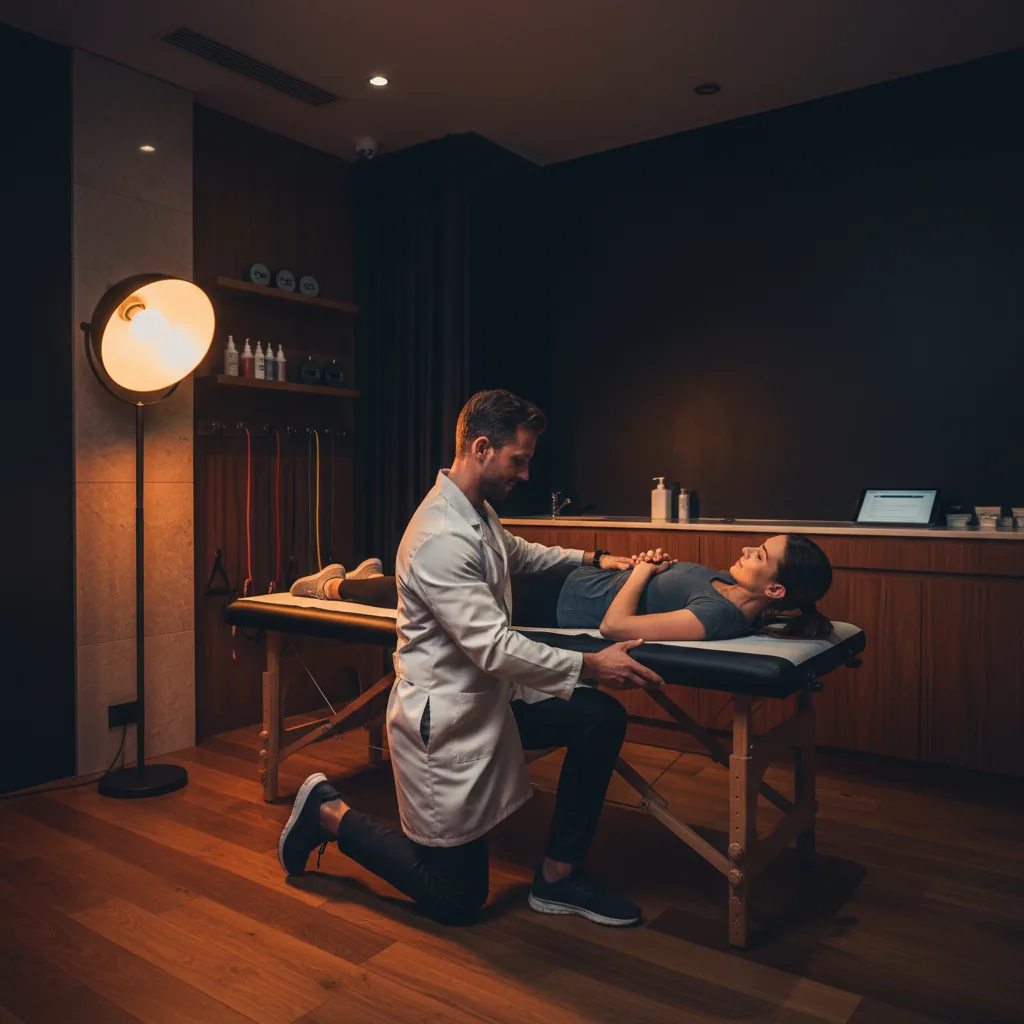
Over the last several years, there has been a significant and noticeable explosion of cash-based physical therapy clinics across the country — and El Paso is no exception. To understand why, you have to understand what drove skilled physical therapists out of the insurance-based system in the first place. Spoiler: it wasn't the pay.
Physical therapists leave insurance-based practice for one primary reason: they can no longer actually treat patients. The insurance-based clinic model is not built around clinical outcomes. It is built around billing volume. The most important metric in a high-volume insurance clinic is how many patients can be pushed through the schedule each day — because more patients means more procedure codes, and more procedure codes means more revenue.
In this model, a physical therapist may be managing 12, 15, or even 18 patients per day simultaneously. The actual hands-on time a patient receives from the therapist — not the aide, not the technician, not the student — may be 10 to 15 minutes per session. The rest of the visit is supervised exercise time run by support staff. This is not what physical therapists trained for. After years of spending six or more years in doctoral programs learning clinical examination, manual therapy, neurodynamic testing, and progressive rehabilitation — being asked to supervise a production floor of patients doing band exercises while they check in briefly between rooms produces a specific kind of burnout: the kind that comes from knowing you can do better and being structurally prevented from doing it.
That is what is driving the cash-based movement. Therapists who want to actually practice the profession they trained for are leaving to open their own practices — where the care model is determined by clinical judgment, not billing optimization.
To be direct about what the insurance-based model optimizes for: it is revenue per therapist per day, not patient outcomes. Clinics are reimbursed by insurance companies on a per-procedure-code basis. The more codes they bill per visit, the more they collect. The more patients they see per therapist per day, the more codes they generate. This creates a structural incentive to maximize patient volume rather than treatment quality.
What does this look like in practice for you as a patient in El Paso?
You arrive for a scheduled appointment. You check in with the front desk. An aide — not a physical therapist — sets you up on a heating pad or electrical stimulation unit for 10 minutes. The physical therapist comes over, asks how you're doing, performs a brief check, and moves to the next patient. You then perform exercises supervised by the aide for the remainder of the session. The therapist may return briefly at the end. You are billed for a full physical therapy visit.
This is not the exception in insurance-based PT. It is the standard operating model — because it is the only way these clinics can be profitable on insurance reimbursement rates while maintaining the staffing ratios their overhead requires.
The problem extends beyond the quality of individual visits. Insurance companies are now aggressively capping how many physical therapy visits a patient can receive per year — not based on clinical need, but on cost management. A patient recovering from a rotator cuff repair who needs 20 sessions may have their authorization cut at 12. A patient with chronic knee pain who has been making steady, measurable progress may be denied additional visits because they've crossed the insurer's visit threshold.
In an insurance-based clinic, the clinician has no authority over this. They can appeal — a process that takes days or weeks and often fails — but they cannot simply continue treating a patient who clinically needs more care if the insurance company says no. The clinical judgment of a doctoral-level physical therapist is overridden by a case manager reviewing a claim from an office who has never seen the patient.
This is not a minor inconvenience. It is a fundamental structural problem with the model. The patient who needs consistent, high-quality, progressive care over 16 weeks gets 10 sessions and is discharged — not because they've recovered, but because a spreadsheet said so.
At Solas PT, the treatment ends when I determine it should end — based on your functional goals, your objective measurements, and your actual recovery trajectory. Not a visit count that an insurance company determined before they knew anything about your specific condition.
No aides. No simultaneous patients. No prior authorization. Dr. Cisneros — present, hands-on, focused entirely on you — for every minute of every session. That is what premium physical therapy in El Paso looks like.
There is something more intangible happening inside the insurance-based model that rarely gets discussed — but it matters deeply to the quality of care patients receive.
Clinical skill is built through repetition and attention. A physical therapist who has the time to perform a thorough subjective interview, execute a complete physical examination, and then apply skilled manual therapy, neurodynamic testing, or a targeted exercise progression — and then observe the patient's response to that treatment in real time — develops clinical judgment over years that cannot be replicated any other way. Every complex case that a therapist works through carefully adds to that clinical depth.
But a therapist who sees 15 patients per day in 10-minute check-ins, running the same group of generic exercises with minimal individualization, is not building that clinical skill. They are executing a protocol. The difference in outcomes between a true clinician and a protocol executor is enormous — and it is a gap that widens every year the insurance-based model continues to structure practice this way.
I want to be straightforward: before I opened Solas PT, when someone in El Paso asked me where to go for physical therapy, I struggled to give an honest recommendation. The experiences I had heard from patients — mediocre at best, frustrating at worst — reflected a market where the incentive structure of insurance-based care had eroded the quality of what was being delivered. That is not a critique of the individual therapists working within those systems. Many of them are talented and genuinely want to help. But the system they're working in makes it structurally difficult to deliver what their training actually prepared them for.
Solas PT was built on a single, non-negotiable foundation: every patient in El Paso deserves premium, one-on-one physical therapy delivered by a doctoral-level clinician — not supervised by an aide, not rushed through a protocol, not cut short by an insurance authorization limit.
That means every session with me includes a hands-on assessment of how you've responded since the last visit, manual therapy targeting the specific joint restrictions and tissue dysfunction identified in your examination, a progressive exercise program updated to reflect your current capacity, a home program revised to match where you are this week — not where you were three weeks ago, and dry needling when clinically indicated, without needing to wait for prior authorization.
It means I am the one treating you. Not an aide who's been working at the clinic for four months. Not a student on rotation who is still learning. Me — with doctoral training in orthopaedic physical therapy, sports rehabilitation, manual therapy, neurodynamics, and dry needling — present for every minute of every session you book at Solas PT in El Paso.
This is the best physical therapy El Paso has to offer. That is not a marketing claim. It is the direct result of a care model that puts clinical quality above billing volume.
When people ask whether cash-based physical therapy is worth the cost compared to insurance-based care, I find the most honest answer is a question in return: what do you think you're actually comparing?
Choosing between cash-based and insurance-based PT in El Paso is not like choosing between two different brands of the same product at different prices. It is closer to the difference between buying a car on Temu and buying a Mercedes-Benz. They are both described as transportation. The experience, the quality, the longevity, and what you're actually getting are categorically different.
The insurance-based clinic is offering you physical therapy visits — technically, on paper. The cash-based clinic is offering you skilled one-on-one care from a doctoral-level clinician who is fully present, fully invested in your specific case, and not managing five other patients while they're with you. Those are not the same thing, priced differently. They are fundamentally different products.
And on the financial side, the gap is often smaller than people assume. Many patients with high-deductible insurance plans are paying $80–150 per visit toward their deductible before insurance covers anything — sometimes for the first 10–20 visits of the year. By the time their insurance actually starts contributing, they've spent more than the entire course of cash-based care would have cost, for sessions that were 15 minutes with a therapist and 40 minutes with an aide.
At Solas PT, we accept HSA and FSA cards, which means you can pay with pre-tax dollars — effectively reducing the out-of-pocket cost. We provide detailed receipts that some patients submit to their insurance for partial out-of-network reimbursement. And because the care is individualized and progressive, most patients at Solas PT reach their functional goals in fewer total visits than they would have needed in a volume-based setting — because each session actually moves the needle.
Cash-based PT in El Paso is the right choice for anyone who wants to actually recover — not just accumulate visits. Specifically, it is the model that makes the most sense for athletes and CrossFit athletes who need sport-specific, progressive rehabilitation that responds to their training demands; anyone dealing with a complex or recurring injury that has not fully resolved with previous treatment; post-surgical patients who need careful, monitored, individualized progression — not a protocol handed to an aide; patients who have been told they need surgery and want a genuine conservative management attempt first; anyone with a high-deductible insurance plan who is going to be paying out-of-pocket either way; and anyone who has experienced the insurance clinic model and is frustrated with the results they've gotten.
El Paso physical therapy patients deserve access to the same level of care that athletes and high performers seek out in major markets. That is what Solas PT provides — one-on-one sports rehabilitation, manual therapy, dry needling, neurodynamic treatment, and progressive functional rehabilitation, all delivered personally by Dr. Cisneros, in West El Paso, with same-week appointments and no referral required.
Ready to experience the difference?
No referral. No session caps. No aides. Call or text to talk through whether cash-based PT is the right fit for your situation.
The explosion of cash-based PT clinics is largely driven by therapist burnout with the insurance-based volume model — where seeing 15+ patients per day with aide supervision became the norm. Skilled physical therapists leaving to open cash-based practices want to actually treat patients one-on-one, not manage a production floor. Patients are choosing cash-based PT for the same reason: they want to see a real therapist who is present and hands-on for every minute of every session — not someone who checks in for 10 minutes while an aide runs the rest of the visit.
Not necessarily. In high-volume insurance-based clinics, it is common to see the physical therapist briefly for the initial evaluation, and then have the majority of subsequent sessions run by a PT aide or technician. The therapist may be managing 4–6 patients simultaneously. At Solas PT, Dr. Cisneros is present and hands-on for every minute of every session — no aides involved at any point in your care.
Insurance companies cap PT visits to reduce costs — not because patients have reached their clinical goals. A patient with a complex rotator cuff injury or post-surgical recovery who clinically needs 20 sessions may be cut off at 12 because the insurer's case manager reviewed the claim and said no. At a cash-based clinic, the clinician determines when treatment ends based on your actual progress and functional goals — not a visit count set by someone who has never examined you.
Yes. Physical therapy is a qualified medical expense under both Health Savings Accounts (HSA) and Flexible Spending Accounts (FSA). You can use pre-tax dollars to pay for sessions at Solas PT, which reduces your effective out-of-pocket cost. We also provide detailed receipts that some patients submit to their insurance for partial out-of-network reimbursement.
Solas PT was built on the foundation that El Paso deserves premium, one-on-one physical therapy — not the high-volume, aide-supervised model that dominates the local market. Dr. Cisneros provides doctoral-level evaluation and treatment for every patient at every session: manual therapy, dry needling, progressive exercise programming, neurodynamic assessment, and an updated home program at every visit. No referral needed. Same-week appointments. Cash-based with HSA/FSA accepted. West El Paso's destination for one-on-one sports rehabilitation and orthopaedic physical therapy.
300 N Resler Dr, Ste F • West El Paso • Physical therapy El Paso • Sports PT El Paso • Manual therapy El Paso • Dry needling El Paso • Same-week appointments available