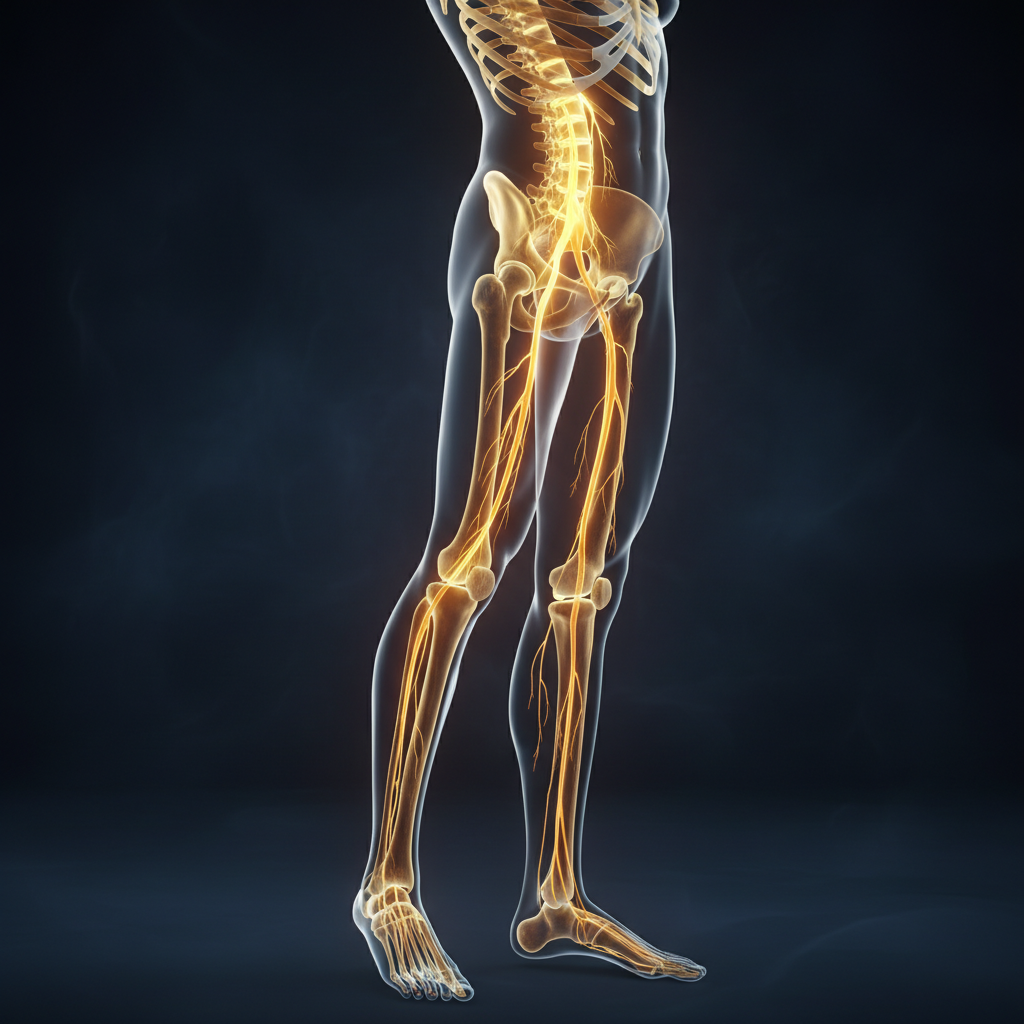
Sciatica isn't a diagnosis — it's a symptom. It describes pain that travels along the path of the sciatic nerve, which runs from the lower back through the hips and buttocks and down each leg. Most people experience it on one side, and the pain can range from a dull ache to a sharp, burning sensation or even an electric shock feeling that makes it difficult to stand, sit, or sleep.
The frustrating reality is that most sciatica is caused by something compressing or irritating the nerve — and until you address that root cause, the pain keeps coming back. This guide covers the best sciatica relief exercises and stretches, what massage can and can't do, natural approaches that have evidence behind them, and most importantly, when home treatment isn't enough.
Red flags — see a provider immediately: Sciatica accompanied by bowel or bladder dysfunction, progressive leg weakness (not just pain), or saddle area numbness (inner thighs, perineum) may indicate cauda equina syndrome — a rare but serious emergency. Don't wait.
What Actually Causes Sciatica
The three most common causes I see in clinical practice are disc herniations, piriformis syndrome, and lumbar stenosis. Understanding which one you have changes everything about how you treat it.
Disc herniation is the most common cause, especially in people under 50. A disc bulging or rupturing posteriorly presses directly on the nerve root. This type of sciatica typically worsens with sitting and forward bending, and improves with walking or standing. Extension-based exercises (McKenzie method) tend to be most effective.
Piriformis syndrome happens when the piriformis muscle — which runs directly over the sciatic nerve in the buttock — becomes tight or inflamed and compresses the nerve. This often mimics disc-related sciatica but responds better to piriformis stretching and hip mobilization than spinal exercises. It's frequently misdiagnosed.
Lumbar stenosis is more common in people over 60. The spinal canal narrows, compressing the nerve. These patients typically feel worse walking and standing, and get relief bending forward or sitting. Flexion-based exercises are more appropriate here.
This is why generic "sciatica exercises" from the internet can be hit or miss — an exercise that's perfect for disc herniation can significantly worsen stenosis. A physical therapist identifies which type you have and builds the right program.
One Movement for Instant Sciatica Pain Relief
People search for this constantly, and I want to give you an honest answer rather than clickbait. There isn't a single universal movement that works for every type of sciatica instantly — but for the most common type (disc-related), one specific exercise consistently provides faster relief than anything else in the early stages.
The McKenzie Press-Up (Prone Press-Up)
Lie face-down on the floor. Place your hands under your shoulders like you're about to do a push-up. Press your upper body up while keeping your hips on the floor, allowing your lower back to arch. Hold 2–3 seconds at the top, lower back down. Repeat 10 times.
This spinal extension movement uses the principle of directional preference — pushing the disc material away from the nerve by loading the spine in the opposite direction from where it herniated. For many patients with disc-related sciatica, this produces near-immediate reduction in leg pain (called centralization — the pain moves from the leg back toward the lower back, which is a positive sign).
Important: If this movement increases your leg pain significantly, stop. Extension is not appropriate for everyone, and attempting it with spinal stenosis can make symptoms worse. This is one of the most important reasons to have your sciatica properly assessed before committing to a program.
Sciatica Pain Relief Exercises: A Complete Program
The exercises below cover both the extension-based and flexion-based approaches, and are appropriate for most mild to moderate sciatica. Pay attention to how your symptoms respond — if leg pain increases with any exercise, skip it and note it for your PT assessment.
Sciatic Nerve Floss (Neural Mobilization)
The sciatic nerve can become adherent to surrounding tissue after compression, limiting its ability to glide normally as you move. Neural mobilization — gently "flossing" the nerve — reduces this adhesion and is one of the most effective sciatica relief exercises with strong clinical evidence.
How to do it: Sit upright in a chair. Extend one knee to straighten the leg while simultaneously tilting your head down (chin to chest). Then bend the knee back down while lifting your head up. Alternate these movements in a slow, rhythmic pumping motion — 10–15 reps. You may feel a gentle pulling sensation down the leg. This should not be sharp or increase your symptoms. Do on the affected side.
Supine Pelvic Tilt
Before loading any muscles, you need to find neutral spine. The pelvic tilt teaches lumbar stabilization — the foundation of all sciatica rehabilitation. It gently activates the deep stabilizers that protect the disc and nerve root during movement.
How to do it: Lie on your back with knees bent. Gently flatten your lower back against the floor by tightening your abs and tilting your pelvis. Hold 5 seconds, release. Repeat 10–15 times. This is a subtle movement — you're not flattening aggressively, just finding the controlled brace position that neutral spine requires.
Knee-to-Chest Stretch
Gently decompresses the lumbar spine and reduces pressure on the affected nerve root. Best for sciatica caused by disc herniation or lumbar stenosis — it opens the posterior disc space and gives the nerve root a little more room.
How to do it: Lie on your back with both knees bent. Bring one knee slowly toward your chest and hold it there with both hands. Hold 20–30 seconds. Switch sides. Then bring both knees to your chest and hold. 3 reps per side. If this significantly worsens your leg pain, stop — it may indicate extension-biased sciatica where this direction is provocative.
Glute Bridge
Weak glutes are a contributing factor in most sciatica cases — they fail to absorb load properly, which transfers stress to the lumbar spine and sciatic nerve. The glute bridge strengthens the posterior chain without loading the spine in compression.
How to do it: Lie on your back, knees bent, feet flat. Drive through your heels and lift your hips until your body forms a straight line from shoulders to knees. Squeeze your glutes at the top — don't hyperextend the lower back. Hold 2 seconds, lower slowly. 3 sets of 12–15 reps. Single-leg variations are a good progression once bodyweight becomes easy.
Side-Lying Hip Abduction (Clamshell)
The gluteus medius stabilizes the pelvis during walking. When it's weak, the pelvis drops with each step, creating a shear force on the lumbar discs and sciatic nerve with every stride. This is one of the most overlooked contributors to recurring sciatica.
How to do it: Lie on your side with hips stacked, knees bent at 90°. Without rotating your top hip backward, lift your top knee as high as you can. Hold 2–3 seconds, lower slowly. 3 sets of 15 per side. Add a resistance band above the knees to progress. Do both sides — even if only one leg has sciatica, bilateral hip weakness is common.
Sciatica Relief Stretches: Targeting the Piriformis & Hip
These stretches directly target the muscles most often involved in sciatic nerve compression. They're appropriate for most types of sciatica and can be done daily — morning and evening — as part of a home program.
Piriformis Stretch (Figure-4)
The piriformis sits directly over the sciatic nerve in the buttock. When it's chronically tight — from sitting, running, or muscle imbalance — it compresses the nerve and creates pain indistinguishable from disc-related sciatica. This is the most important stretch for piriformis syndrome and a valuable addition for any sciatica program.
How to do it: Lie on your back, knees bent. Cross your affected-side ankle over the opposite knee. Reach through the gap and pull the uncrossed leg toward your chest. You should feel a deep stretch in the crossed-leg glute. Hold 30–45 seconds. 3 reps per side, twice daily. If you feel sharp nerve pain rather than a muscle stretch, ease off the pull.
Supine Hamstring Stretch
Tight hamstrings pull on the ischial tuberosity (sit bones) and increase tension on the sciatic nerve throughout its course. Keeping the hamstrings flexible reduces the baseline tension the nerve is under — especially important for people who sit for work or have a sedentary lifestyle.
How to do it: Lie on your back. Lift one leg straight up and hold behind the thigh (or use a strap around the foot). Gently straighten the knee until you feel a stretch in the back of the thigh. Hold 30 seconds. Do NOT aggressively force the leg — a mild stretch is the goal. 3 reps per side. Avoid standing toe-touch hamstring stretches during an active sciatica episode — they can aggravate the nerve.
Kneeling Hip Flexor Stretch
A tight psoas pulls the lumbar spine into excessive lordosis, narrowing the posterior disc space and increasing pressure on nerve roots. For people who sit for 6–8 hours a day, the hip flexors are almost universally tight and contributing to their back and sciatic symptoms.
How to do it: Kneel on one knee with the other foot forward. Tuck your pelvis slightly (posterior tilt) before leaning forward — this is what actually stretches the psoas, not just lunging forward. Feel the stretch at the front of the kneeling hip. Hold 30–45 seconds. 3 reps per side. Do this every day if you sit for work — it's one of the highest-impact daily habits for back and nerve health.
Lumbar Rotation Stretch
Restores rotational mobility in the lumbar spine and provides relief from the muscle guarding that often accompanies sciatica. Particularly useful for patients who wake up with stiffness and increased sciatic symptoms in the morning.
How to do it: Lie on your back with knees bent. Slowly let both knees drop to one side while keeping your shoulders flat. Hold 20–30 seconds. Return to center and repeat to the other side. 3 reps per side. Move slowly and without forcing the range — this should feel like relief, not strain.
Sciatica Pain Relief Massage: What It Can and Can't Do
Massage for sciatic relief is one of the most searched topics around this condition — and one of the most misunderstood. Let me be direct about what massage actually does for sciatica, because a lot of people spend money on it expecting results it can't deliver alone.
What massage can do: Reduce muscle tension in the piriformis, glutes, and paraspinals that are contributing to nerve compression. Decrease pain-sensitization by stimulating gate-control pain mechanisms. Improve local blood flow and reduce the inflammatory environment around the nerve. Provide temporary but meaningful pain relief that makes it easier to do the exercises that create lasting change.
What massage cannot do: Push a disc back into place. Physically decompress a nerve root. Provide lasting relief without addressing the underlying cause — weak muscles, poor movement patterns, and disc mechanics. This is why patients who get massage for sciatica often feel better for a day or two, then the pain returns.
Sciatica pain relief massage is most valuable as a complement to a proper physical therapy program — not a replacement for it. At Solas PT, manual therapy including soft tissue mobilization and targeted massage is part of most sciatica treatment sessions, combined with nerve mobilization and corrective exercise.
Self-massage technique for sciatic relief: Sit on a firm chair or floor. Place a lacrosse ball or tennis ball under the affected buttock, directly in the center of the glute. Slowly shift your weight onto it and hold on tender spots for 30–60 seconds. Move around the glute to find tight areas. This is particularly effective for piriformis syndrome and can provide meaningful sciatica nerve pain relief between PT sessions.
Why Dry Needling + Nerve Flossing Works Better
For most patients with sciatica — especially piriformis syndrome — dry needling combined with nerve flossing outperforms massage in both speed of relief and duration of effect. Here's why: massage works on the surface of the muscle, while dry needling reaches the deep trigger points within the piriformis that are compressing the sciatic nerve from the inside. The needle directly disrupts the contracted muscle fibers, producing a release that hands-on soft tissue work simply can't replicate at that depth.
At Solas PT, Dr. Cisneros pairs dry needling with nerve flossing (neural mobilization) — a technique that gently mobilizes the sciatic nerve along its full course, reducing adhesions that have formed between the nerve and surrounding tissue after weeks of compression. Together, these two techniques address both the tissue compressing the nerve and the nerve's own mobility — a combination that produces faster, more lasting relief than massage or stretching alone.
Electrodry Needling — A Specialty Technique at Solas PT: For more stubborn or chronic sciatica cases, Dr. Cisneros uses an advanced technique that combines dry needling with electrical stimulation (TENS) delivered directly through the needles. Once the needles are placed in the target muscles, a low-frequency electrical current is applied — amplifying the neuromuscular response, driving deeper muscle relaxation, and producing a prolonged analgesic effect that outlasts standard dry needling alone. This technique is particularly effective for chronic piriformis syndrome, sciatic nerve sensitization, and patients who haven't responded fully to conventional manual therapy or massage. It is not widely offered — it requires both dry needling certification and advanced training in electrical stimulation application.
Natural Sciatica Remedies: What Has Evidence
I'll be straightforward: there are no natural supplements or devices that treat the underlying cause of sciatica. But there are several approaches that meaningfully reduce pain and support recovery, and are worth using alongside your exercise program.
Ice and Heat
Ice reduces acute inflammation around the nerve root — use it in the first 24–72 hours of a flare, 15–20 minutes at a time. Heat relaxes tight muscles like the piriformis and paraspinals — more useful for chronic, achy sciatica than acute nerve pain. Alternating both is sometimes most effective.
Walking
Consistent, low-impact walking is one of the best natural remedies for sciatica. It promotes disc hydration, reduces nerve sensitization, and keeps the piriformis and hip extensors mobile. Aim for 20–30 minutes daily, even if it's uncomfortable initially — stopping moving makes sciatica worse over time.
Hydration
Spinal discs are approximately 80% water. Chronic dehydration reduces disc height, decreasing the space available for nerve roots. Drinking adequate water (half your bodyweight in ounces daily) won't cure sciatica but directly supports disc health and resilience over time.
Sleep Position
Sleeping in a position that compresses the sciatic nerve makes recovery slower. Side sleepers: place a pillow between your knees to keep your spine neutral. Back sleepers: place a pillow under your knees to reduce lumbar extension. Stomach sleeping increases spinal compression and is generally the worst position for sciatica.
Anti-Inflammatory Diet
Chronic systemic inflammation worsens nerve sensitization. Reducing refined sugar, processed oils, and alcohol while increasing omega-3s (fatty fish, walnuts), vegetables, and antioxidants can meaningfully reduce pain levels over weeks. Not a quick fix, but part of a complete recovery approach.
Dry Needling + Electrostimulation
For piriformis syndrome and nerve sensitization, dry needling directly releases the deep trigger points compressing the sciatic nerve — faster than stretching or massage alone. At Solas PT, Dr. Cisneros also offers electrodry needling: TENS current delivered through the needles for amplified, longer-lasting relief. Combined with nerve flossing, this is the most effective non-surgical approach for stubborn sciatica. Learn more about dry needling →
Sciatica that keeps coming back needs a real diagnosis
Generic sciatica stretches only help if your sciatica is from the right cause. Dr. Cisneros will identify whether your pain is disc-related, piriformis-driven, or from stenosis — and apply the correct treatment, including dry needling or electrodry needling with TENS if indicated. No referral needed. Same-week appointments in West El Paso.
When Home Treatment Isn't Enough
Home exercises and stretches are appropriate for mild to moderate sciatica with a clear mechanical pattern. But there are several situations where going it alone is likely to delay recovery and potentially cause harm.
See a physical therapist if your sciatica has persisted for more than 4 weeks, if you have progressive weakness in the leg (not just pain), if the pain wakes you at night or is constant regardless of position, if you've had multiple episodes in the past year, or if you've tried generic exercises without improvement. A one-on-one assessment takes 45–60 minutes and will identify exactly which type of sciatica you have, which direction of movement helps vs. hurts, what muscle imbalances are driving your symptoms, and what your realistic recovery timeline looks like.
Most sciatica cases I treat resolve significantly within 6–10 sessions when the diagnosis is correct and the program is individualized. The patients who struggle longest are those who spent months on generic internet exercises that weren't right for their specific type of nerve involvement.
At Solas PT in El Paso: Every session is one-on-one with Dr. Cisneros — no aides, no cookie-cutter programs. No referral needed. Direct access in Texas means you can book today and start this week. Most patients with sciatica are seen within 2–3 days of reaching out.
Frequently Asked Questions
Most acute sciatica caused by a disc herniation resolves within 6–12 weeks with appropriate conservative treatment — rest, targeted exercises, and physical therapy. Piriformis syndrome often responds faster, sometimes within 3–4 weeks of consistent treatment. Sciatica from lumbar stenosis tends to be more chronic and managed rather than fully "cured," though significant improvement is typical. The biggest factor in recovery time is getting the right treatment for the right type of sciatica — the wrong exercises can keep you in pain for months longer than necessary.
Keep moving — within your tolerance. Complete bed rest is one of the worst things for sciatica because it deconditions the muscles supporting the spine and increases neural sensitization. Gentle walking, the stretches and exercises in this guide, and staying active (avoiding prolonged sitting or standing in one position) all support faster recovery. The exception: if any movement causes significant, lasting increase in leg symptoms, see a PT before continuing to exercise on your own.
Yes, as part of a complete treatment approach — not as a standalone solution. Massage for sciatic relief works best on the piriformis and surrounding hip muscles, reducing the muscular compression on the nerve. It can provide meaningful temporary relief and make it easier to do the exercises that create lasting change. Manual therapy within a physical therapy session is more targeted and clinically effective than general massage, as the therapist can assess exactly which tissues need treatment.
The most common aggravators are prolonged sitting (increases disc pressure and compresses the piriformis), forward bending (worsens disc-related sciatica), and inactivity (deconditions the stabilizing muscles). Sleeping on your stomach, wearing unsupportive footwear, and carrying weight on one side consistently (bags, children) all worsen sciatic symptoms over time. Fixing these daily habits is just as important as the exercises.
Yes, particularly for piriformis syndrome. Dry needling directly into the piriformis trigger points releases the muscle more quickly than stretching alone and can provide significant sciatica nerve pain relief within 1–3 sessions. For disc-related sciatica, dry needling the surrounding paraspinal and glute muscles can reduce the pain cycle and make rehabilitation exercises more effective. Dr. Cisneros uses dry needling as part of sciatica treatment when clinically appropriate — not as a substitute for addressing the underlying cause.
No. Most sciatica can be accurately diagnosed through a clinical assessment — movement testing, neurological screening, and palpation — without imaging. In fact, studies show that MRI findings frequently don't correlate with pain levels: many people with large disc herniations have no pain, and vice versa. A PT assessment identifies what's driving your specific symptoms and builds treatment around that, whether or not you have imaging. If imaging is clinically necessary, Dr. Cisneros will refer you appropriately.
Electrodry needling combines standard dry needling with electrical stimulation (TENS) delivered directly through the inserted needles. Once Dr. Cisneros places the needles into the target muscles — piriformis, glutes, or paraspinals — a low-frequency electrical current is applied, which amplifies the muscle's twitch response, drives deeper tissue relaxation, and activates the body's pain-modulating pathways more powerfully than needling alone. For sciatica, this technique is particularly effective for chronic piriformis syndrome, patients with high levels of nerve sensitization, and cases that haven't fully responded to massage, stretching, or standard manual therapy. It's a specialty technique not widely offered — Solas PT is one of the few clinics in El Paso providing it as part of comprehensive sciatica treatment.
Sciatica That Keeps Coming Back
Needs More Than Stretches.
If your sciatica isn't responding to home exercises — or keeps returning every few months — a one-on-one assessment with Dr. Cisneros will find the root cause and build a plan that fixes it. No referral needed. Same-week appointments available in West El Paso.
Book a SessionAlso read: Sciatica Treatment in El Paso → | Dry Needling for Sciatica → | Lower Back Pain Exercises →