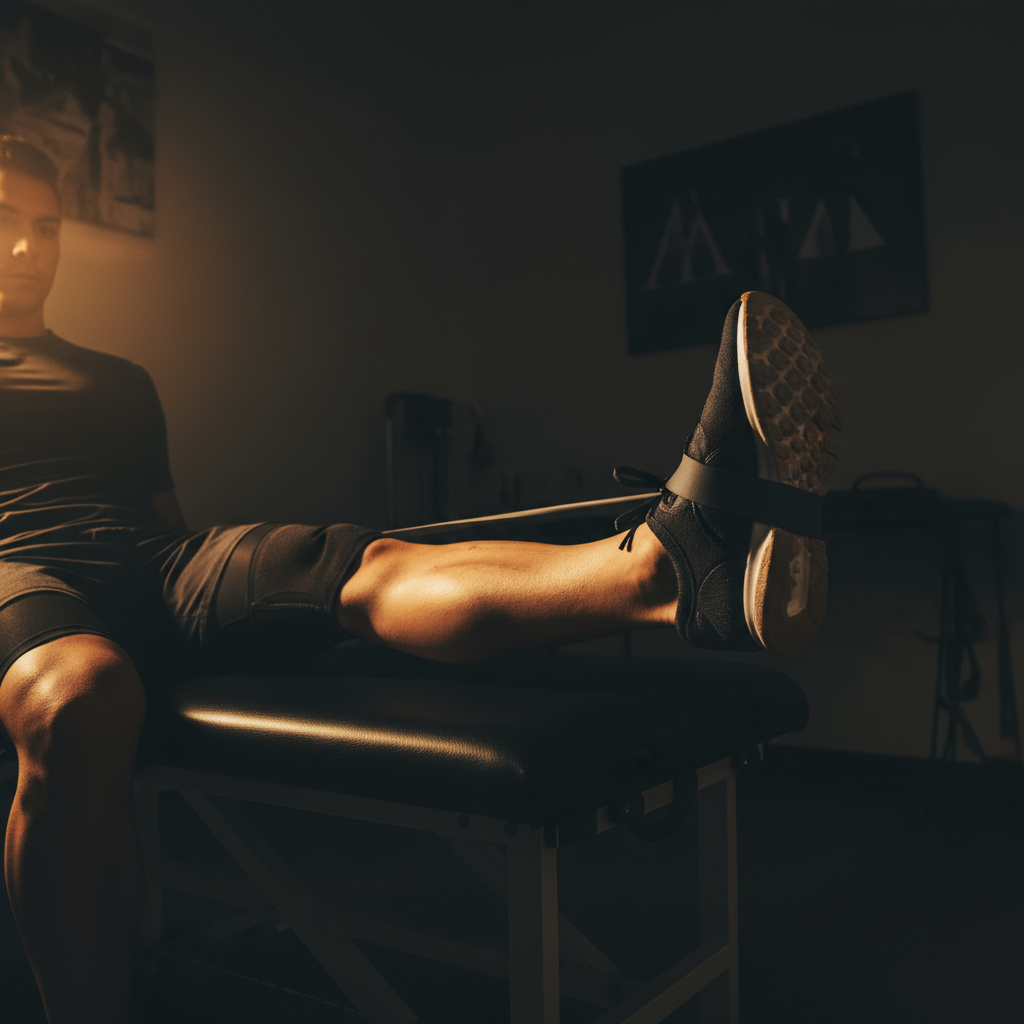
I see knee pain across every age and activity level at Solas PT. Runners with patellofemoral pain, construction workers with meniscus injuries, older adults with osteoarthritis, weekend athletes who pushed too hard. The conditions are different, but the mistake is almost always the same: they either stopped moving entirely or started doing exercises that weren't appropriate for their specific diagnosis.
This guide gives you the physiotherapy exercises for knee pain that have the strongest evidence behind them, clear guidance on what to avoid, and specific answers on low-impact options — including whether an exercise bike is actually good for a painful knee.
Know your diagnosis first: Knee pain from osteoarthritis responds differently than patellofemoral pain syndrome, a meniscus tear, or IT band syndrome. The exercises below are appropriate for most mechanical knee pain, but if you have significant swelling, locking, giving way, or pain that came on after a traumatic event, get assessed before starting any program.
What's Actually Causing Your Knee Pain
The knee is a relatively simple hinge joint, but it's governed by the strength and alignment of everything above and below it. Most knee pain I treat in the clinic isn't primarily a knee problem — it's a hip weakness problem or a foot/ankle alignment problem that's loading the knee incorrectly.
Patellofemoral Pain Syndrome — pain around or behind the kneecap, worsened by stairs, squatting, and sitting for long periods. Caused by poor patellar tracking, usually from weak VMO (inner quad) and weak hip abductors.
IT Band Syndrome — sharp lateral knee pain that comes on at a predictable point during running. Caused by weak glutes and hip abductors, not tight IT band tissue (the IT band doesn't actually stretch).
Knee Osteoarthritis — gradual joint space narrowing causing pain, stiffness, and swelling. Contrary to what many patients are told, exercise is the most effective treatment — not rest or avoidance.
Patellar Tendonitis — pain just below the kneecap at the patellar tendon attachment. Common in jumping athletes. Responds to eccentric loading exercises, not rest.
Meniscus Irritation — pain along the joint line, worsened by deep squatting and pivoting. Many meniscus tears respond to physiotherapy without surgery — especially in patients over 40.
Hamstring Tightness / Baker's Cyst — pain or tightness behind the knee. Hamstring flexibility work and addressing the underlying cause (usually arthritis or a tear) resolves most cases.
Physiotherapy Exercises for Knee Pain: The Foundation Program
The most important concept in knee pain rehabilitation: the muscles that matter most are above the knee, not around it. The quadriceps, hamstrings, and especially the hip abductors and glutes control how load is distributed across the knee joint. Strengthening these is the foundation of every effective knee pain exercise program.
Quad Set (Isometric)
The first exercise I prescribe for almost every knee condition because it reactivates the quadriceps without any joint movement or compression. After injury or surgery, the quads inhibit rapidly — this exercise restores the neuromuscular connection before progressing to loaded exercises.
How to do it: Sit on the floor with your leg straight. Place a small rolled towel under your knee. Tighten your quad by pressing the back of your knee down into the towel — your heel should lift slightly. Hold 5 seconds, relax. 3 sets of 15. You should feel the muscle above your kneecap contract. If you can't feel it engaging, try with your foot slightly dorsiflexed (toes pulled toward you).
Short Arc Quad
Targets the VMO (vastus medialis oblique) — the teardrop-shaped inner quad muscle that controls patellar tracking. Weakness here is the primary cause of patellofemoral pain syndrome and contributes to most anterior knee pain. The short arc limits range to the last 30° of extension where the VMO is most active.
How to do it: Lie on your back. Place a rolled towel or foam roller under your knee to elevate it about 30°. Keeping the thigh still, straighten your knee fully. Hold 3 seconds at full extension, lower slowly. 3 sets of 15. You should feel the inner quad fire — if you only feel the outer quad, try rotating your leg slightly outward before performing the rep.
Straight Leg Raise
Strengthens the entire anterior chain — quad, hip flexor, and core — without bending the knee at all. One of the safest and most effective exercises for knee pain across all diagnoses, including post-surgical, meniscus injuries, and severe osteoarthritis.
How to do it: Lie on your back. Bend the uninvolved knee, keep the involved leg straight. Tighten the quad of the straight leg (pull toes toward you), then lift it to the height of the opposite knee. Hold 3 seconds, lower slowly. 3 sets of 15. Progress by adding an ankle weight (start with 1–2 lbs) once bodyweight becomes easy. This is one of the highest-value exercises for knee pain because it's safe at virtually every stage of rehabilitation.
Clamshell (Hip Abduction)
Targets the gluteus medius — the most consistently weak muscle I find in patients with knee pain. Weak hip abductors allow the femur to rotate inward during walking and squatting, driving the kneecap outward and creating the malalignment pattern that causes patellofemoral pain, IT band syndrome, and medial knee stress. This single exercise addresses the root cause of most knee problems.
How to do it: Lie on your side with hips and knees bent at 90°, hips stacked. Without rotating your pelvis backward, lift your top knee as far as you can. Hold 2 seconds, lower slowly. 3 sets of 15 per side. Add a resistance band above the knees to progress. Even if only one knee hurts, train both sides — hip weakness is typically bilateral.
Glute Bridge
Simultaneously strengthens the glutes, hamstrings, and lumbar extensors while reinforcing proper knee tracking during hip extension. Research consistently shows that glute strengthening reduces knee pain loads by improving lower extremity alignment — less hip drop means less valgus stress at the knee with every step.
How to do it: Lie on your back, knees bent, feet flat. Drive through your heels and lift your hips until your body makes a straight line from knees to shoulders. Squeeze your glutes at the top — don't hyperextend your lower back. Hold 2–3 seconds, lower slowly. 3 sets of 15. Progress to single-leg bridges once this becomes easy. Place a resistance band just above your knees and press outward throughout the movement for an added hip abductor challenge.
Terminal Knee Extension (Band)
One of the most effective knee pain relief exercises for patellofemoral syndrome and post-surgical rehab. It specifically trains the VMO in the last 20–30° of extension — the range where most knee pain occurs during functional activities — in a standing, weight-bearing position.
How to do it: Anchor a resistance band behind your knee (loop it around a doorknob at knee height, step back until there's tension). Stand with slight knee bend on the affected side. Straighten your knee fully against the band resistance, squeezing your quad at full extension. Hold 2 seconds, bend slowly. 3 sets of 20. This can be done during any activity — I have patients do it while brushing teeth or watching TV once they learn the movement.
Hamstring & Calf Stretch
Tight hamstrings and calves are extremely common contributors to back-of-knee pain and can alter gait mechanics in ways that increase patellofemoral loading. The combination of both in a single stretch is one of the most time-efficient knee pain relief exercises for daily use.
How to do it: Sit on the floor with one leg straight, the other bent. Reach toward your toes on the straight leg — stop when you feel a stretch in the back of the thigh, not when your hand reaches your foot. Hold 30 seconds. Then flex your foot back (pull toes toward you) to add a calf/Achilles component. 3 reps per side. Alternative: lie on your back and use a strap around your foot to pull the leg up with the knee straight.
Knee Pain Exercises to Avoid: What Makes It Worse
This is the section most patients need most urgently. When you're in pain and motivated to fix it, it's tempting to push through exercises that feel like they should be working. But several commonly recommended exercises consistently aggravate the conditions I see most in the clinic.
⚠️ Full Deep Squats (with Patellofemoral Pain)
Squatting past 90° of knee flexion dramatically increases patellofemoral joint stress — up to 7–8x bodyweight at full depth. For someone with patellofemoral pain syndrome or chondromalacia, this is the most reliable way to flare the condition. Limit squats to 0–60° of knee flexion during rehabilitation and progress depth only as pain allows. Wall sits at shallow angles are a much safer alternative early on.
⚠️ Leg Extension Machine (Heavy Loading)
The seated leg extension machine applies a significant shear force across the patellofemoral joint, particularly in the mid-range of the movement. For healthy knees it's fine; for patellofemoral pain, patellar tendonitis, or post-surgical rehab, it can cause significant pain and tissue stress. Terminal knee extensions with a band (above) are a far safer alternative that targets the same muscle without the problematic shear forces.
⚠️ Running Through Knee Pain
Running generates 3–5x bodyweight of force through the knee joint with every stride. Running through moderate to severe knee pain doesn't "work it out" — it perpetuates the inflammatory cycle and often converts an acute problem into a chronic one. Switch to low-impact cardio (cycling, swimming, elliptical) until you can walk pain-free before returning to running. When you do return, follow a structured run-walk program.
⚠️ Lunges with Knee Caving (Valgus Collapse)
Lunges are an excellent knee rehab exercise when done correctly. But if your knee caves inward during the lunge (a sign of hip weakness), you're loading the medial knee compartment and patellofemoral joint in a damaging position. Fix the movement pattern first — use a resistance band above the knees to cue outward pressure, or hold a doorframe for balance. Don't just do more reps of a bad pattern.
⚠️ IT Band Stretching (for IT Band Syndrome)
The IT band is dense connective tissue — it does not meaningfully stretch regardless of how hard or long you hold the position. Cross-legged standing stretches and foam rolling the IT band provide temporary sensation but don't address the cause: weak hip abductors. Spend that time on clamshells and hip strengthening instead. You'll see faster and more lasting results.
⚠️ High-Impact Plyometrics Before Building Base Strength
Jumping, box jumps, and plyometric exercises require the knee to absorb 5–7x bodyweight of impact force. Without adequate quad, glute, and hip strength, this load is transferred to the passive structures — cartilage, meniscus, and ligaments. Plyometrics are a great final stage of knee rehabilitation; they're a terrible starting point.
Low-Impact Exercises for Knee Pain: Staying Active Safely
One of the most damaging things knee pain does is stop people from exercising altogether. Inactivity weakens the muscles that support the knee, increases systemic inflammation, promotes weight gain that further loads the joint, and worsens pain sensitivity. The answer isn't rest — it's finding the right low-impact exercises that maintain fitness without aggravating the knee.
Is an Exercise Bike Good for Knee Pain?
Yes — cycling is one of the best low-impact exercises for knee pain and is frequently prescribed as part of physiotherapy programs for patellofemoral syndrome, osteoarthritis, and post-surgical rehabilitation. Here's why it works: the circular pedaling motion keeps the knee moving through a comfortable range without the impact forces of walking or running. It also specifically strengthens the quad and helps maintain cartilage health by pumping synovial fluid through the joint.
Setup matters: Seat height is critical. If the seat is too low, you'll flex the knee past 90° and increase patellofemoral stress. If it's too high, your pelvis will rock side to side and stress the lateral knee. The correct position: at the bottom of the pedal stroke, your knee should have a slight bend — approximately 25–30° of flexion. Start with low resistance and short duration (10–15 minutes), gradually building to 30–45 minutes as tolerated.
Recumbent bike vs. upright: Recumbent bikes place the leg in a more extended position throughout the pedal stroke, which further reduces patellofemoral stress. If you have significant anterior knee pain or patellofemoral syndrome, start with a recumbent bike and transition to upright as symptoms improve.
Aquatic Exercise & Pool Walking
Water provides buoyancy that reduces the load on the knee by up to 75% (waist-deep water) compared to land. Pool walking, water aerobics, and pool-based range-of-motion exercises are particularly valuable for patients with severe osteoarthritis or post-surgical swelling where even low-impact land exercise is too painful. The resistance of water also provides a gentle strengthening stimulus without joint compression.
How to use it: Pool walking forward and backward (20 minutes), leg swings and kicks in the water, shallow squats while submerged. Progress to deeper water as pain improves. If you don't have pool access, a warm bath with gentle range-of-motion exercises achieves some of the same decompression effect.
Elliptical Trainer
The elliptical provides a running-like cardiovascular workout at significantly reduced knee impact — typically 30–50% less joint stress than treadmill running. It maintains the hip and knee extension pattern of running while eliminating the heel-strike impact. A good transition exercise for runners working back toward running after a knee injury.
How to use it: Start with low resistance and a comfortable stride length. Shorter strides reduce knee flexion angle and are more comfortable for most knee conditions. Backward elliptical motion specifically targets the VMO and can be particularly effective for patellofemoral pain. Build duration before adding resistance.
Dry Needling for Knee Pain
Trigger points in the quadriceps — particularly the vastus medialis and rectus femoris — are a frequently overlooked driver of anterior and patellofemoral knee pain. These trigger points create referred pain patterns that feel like they're coming from inside the knee joint, and they don't resolve with stretching or exercise alone because the contracture is within the muscle fiber itself.
Dry needling directly into these trigger points releases the muscle contraction, reduces the referred pain pattern, and allows the strengthening exercises above to work more effectively — because you can't effectively train a muscle that's in chronic contracture. For patients who have been doing the right exercises but still have persistent knee pain, trigger point dry needling is often the missing piece that allows full recovery.
Learn more: Dry Needling at Solas PT El Paso →
Still have knee pain after trying exercises?
Knee pain that doesn't respond to exercise usually has a specific structural reason — a weakening pattern, an alignment issue, or trigger points that are preventing the muscles from doing their job. Dr. Cisneros will identify the exact cause and combine hands-on manual therapy, exercise progressions, and dry needling if indicated. No referral needed. Same-week appointments. Cash-based with HSA/FSA accepted.
Frequently Asked Questions
If I had to choose one exercise, it's the straight leg raise — because it's safe across virtually every knee diagnosis, reactivates the quad without joint compression, can be done anywhere without equipment, and is appropriate even in the acute phase of pain. That said, a single exercise is rarely enough. The most effective knee pain relief comes from combining quad activation (straight leg raise, quad set), hip strengthening (clamshell, glute bridge), and low-impact cardio (cycling, pool walking) into a consistent program.
Exercise — but the right exercise. Complete rest weakens the muscles that support the knee, promotes weight gain, and worsens pain sensitization. For most knee conditions, gentle low-impact movement (the exercises in this guide, cycling, pool walking) is both safe and therapeutic from day one. The exception: if your knee is acutely swollen, locked, or has given way, rest and ice for 24–48 hours and get assessed before exercising. Swelling inside the joint inhibits the quad reflexively — so if there's significant effusion, no amount of quad exercises will work until the swelling is controlled.
Yes, for most knee conditions. Walking is low-impact, maintains range of motion, promotes cartilage nutrition (cartilage has no blood supply — it gets nutrients from the compression and decompression of walking), and keeps the supporting muscles active. For severe osteoarthritis or acute patellofemoral flares, start with shorter walks on flat, even surfaces and build up gradually. Walking on hills or uneven terrain adds significant knee stress and should be added later. If walking consistently increases your pain, switch to cycling or pool walking until you've been assessed.
Patellofemoral pain syndrome: 6–12 weeks of consistent PT typically produces significant improvement. IT band syndrome: 4–8 weeks if the hip weakness driving it is addressed directly. Mild meniscus irritation without a complete tear: 6–10 weeks. Osteoarthritis: managed rather than cured — most patients see meaningful pain reduction and function improvement within 8–12 weeks, with ongoing maintenance. Post-surgical timelines vary widely by procedure. The biggest factor in all of these is consistency — patients who do their home exercises between sessions recover significantly faster than those who only do exercises in the clinic.
In most cases, yes. The majority of knee pain conditions — patellofemoral syndrome, IT band syndrome, mild to moderate osteoarthritis, most meniscus tears in patients over 40, patellar tendonitis — respond well to physical therapy without surgery. Multiple randomized controlled trials have shown that PT produces equivalent or better outcomes than arthroscopic surgery for degenerative meniscus tears and mild to moderate osteoarthritis. Surgery becomes necessary for complete ACL tears in active patients, large meniscus tears causing mechanical symptoms (locking), severe bone-on-bone arthritis requiring joint replacement, and certain acute traumatic injuries. A thorough PT assessment and, when needed, imaging will clarify your options honestly.
No. Texas allows direct access to physical therapy — no physician referral required. You can call Solas PT today, get a one-on-one knee assessment with Dr. Cisneros, and start a personalized exercise program this week. Most patients are seen within 2–3 days of reaching out. Call or text (915) 318-7381 or book online.
Knee Pain That Keeps Coming Back
Needs More Than Generic Exercises.
If your knee pain isn't improving — or you're not sure whether your condition needs surgery — a one-on-one assessment with Dr. Cisneros will give you a clear diagnosis and a plan built specifically for your knee. No referral needed. Same-week appointments in West El Paso.
Book a Knee AssessmentAlso read: Knee Pain Treatment in El Paso → | Dry Needling for Knee Pain → | Lower Back Pain Exercises →